SpaceX's Rockets Have Evolved A Lot Throughout The Years

With all the Twitter acquisition drama and the Tesla lawsuits, we sometimes forget that Elon Musk also has a hand in space travel. It's actually been over 20 years now since he founded SpaceX and began working towards an ambitious mission to Mars. While that goal is probably still quite a way off, there's no denying that he has achieved some success in this field.
Since the inception of SpaceX, the company's rockets have evolved pretty significantly. They've generally grown bigger and stronger in an effort to achieve their founder's goals. Just how much have they changed since SpaceX began all those years ago, though?
The Falcon 1 was SpaceX's first rocket and had some teething problems
The first rocket that SpaceX ever built was Falcon 1. Established several years after the company's creation, it was around for much of the late 2000s. Unfortunately, it didn't always have the most success, racking up three launch failures before actually setting off in 2008. Running on liquid oxygen and kerosene, this 68-foot tall rocket was able to carry nearly 1,500 pounds. Its final launch in July 2009 was its most successful when the single-engine-powered vehicle sent a satellite into orbit.
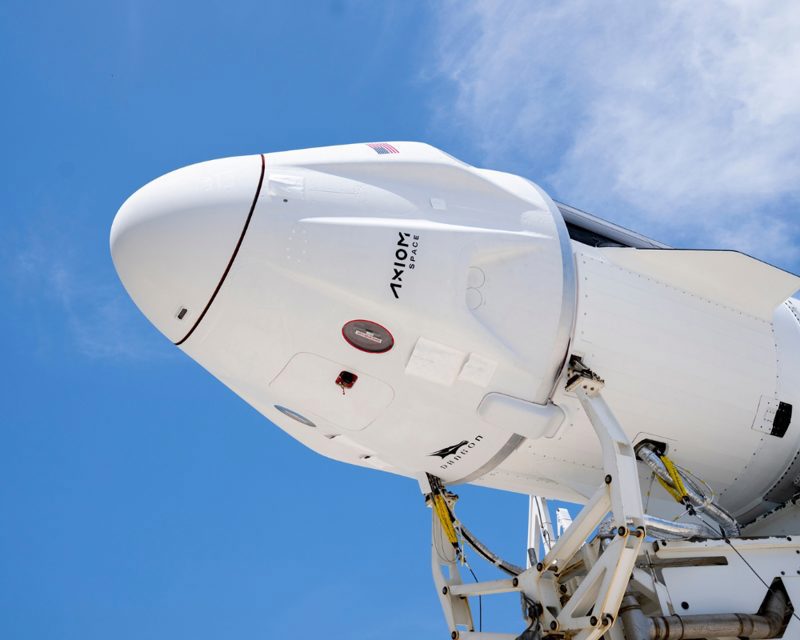
The Dragon transported cargo to the International Space Station for a decade
Around the same time as Falcon 1, SpaceX also worked on the Dragon. The aim of this was apparently to create a private spacecraft that could be used to send cargo to the International Space Station. NASA ultimately selected the vehicle for the job, with its maiden flight coming in December 2010. It achieved nearly two dozen missions over the next decade before being retired, and it was the first commercially built spacecraft to ever be successfully recovered from orbit. It only transported cargo as there was no space for crew, with the Dragon measuring just 20 feet in length and boasting a volume of 350 cubic feet.
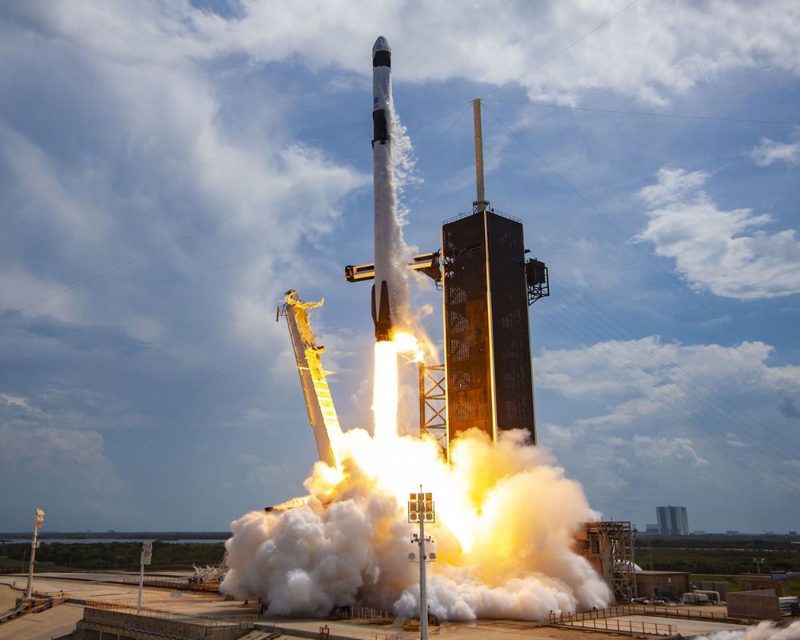
Falcon 9 was the rocket's successor, which boasted a much larger capacity
The Falcon 1 was soon followed by the Falcon 9, reportedly named as such because of a cluster of nine engines. Able to carry much more than its predecessor, its capacity was just shy of 29,000 pounds. The Falcon 9 measured 230 feet and was a two-stage rocket that debuted in June 2010. Although eager to reuse the first stage for future launches, the company had some trouble getting it to land without crashing. It wasn't until the ninth launch in December 2015 that SpaceX was finally successful.
The Falcon 9 Reusable Development Vehicle met an unfortunate end
SpaceX's desire to reuse the first stage of the Falcon 9 seemingly led to the creation of the Falcon 9 Reusable Development Vehicle. It was announced in 2012, several years before the previous rocket managed to achieve a successful landing. Five flights were made with this follow-up, all of which were completed in 2014. Although the rocket did manage some success, such as exceeding 3,280 feet on several flights, it ended in disaster. The final launch in August of that year ended with the vehicle exploding because of a blocked sensor.
The Falcon Heavy was the most powerful rocket in use when it debuted
Over the years, the Falcon rockets have seemingly gotten heavier. Following the Falcon 1 and the Falcon 9, SpaceX developed the Falcon Heavy rocket, which can carry almost 141,000 pounds. Measuring as tall as 230 feet, it was the most powerful rocket around when it debuted. The vehicle comes with an upper stage that's supported by three first-stage boosters, which are influenced by those of its predecessor. The Falcon Heavy first launched in February 2018 and thankfully had a successful debut flight, where it launched one of Musk's Tesla cars into space.
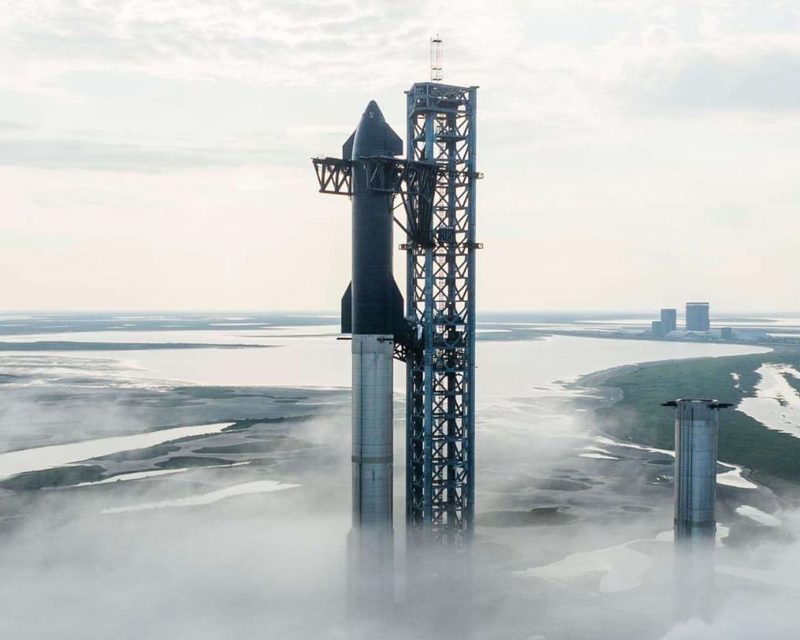
Starship and Super Heavy will potentially achieve Elon Musk's mission to Mars
Given that some of SpaceX's rockets have ended in significant failure, it's a relief that none of them had any crew on board. However, the company has been working on missions to send people out into space, which is where Starship and Super Heavy come in. The spaceship and rocket combination is how Elon Musk apparently plans on sending people to Mars, and some progress has been made. Starship has recorded multiple flights, although there have been explosions as well. It's currently on prototype SN20, with stainless steel now the material of choice over the original carbon fiber. Measuring around 400 feet tall, it ultimately aims to be the most powerful vehicle to ever launch into space.
There's no denying that Elon Musk is an ambitious man who has achieved some great things with SpaceX in the past. Although there have been a lot of failures with his rockets, that's to be expected with something as complex as space travel. What matters is that the rockets have evolved to resolve these issues and continue getting bigger and better. If things keep going in this direction, it might not be long before moving to Mars becomes a very real possibility.
You May Also Like
 Education
The Difference Between Correlation and Causation
 Science
Why Some Studies Cannot Be Replicated
 Science
How to Tell a Breakthrough From a Press Release