Jupiter Officially Has The Most Moons In Our Solar System

The thought of a planet having more than one moon might seem strange, given we’re so accustomed to just the one above Earth. In fact, the notion that our moon isn’t unique might be tough for some people to get their heads around. The fact that we call it the moon makes it seem like a single entity when - in reality - these celestial bodies are pretty common throughout the galaxy.
There are only a few planets in this vicinity that don’t have moons, with Jupiter and Saturn standing out for having the most. However, it seems that Jupiter officially has the most moons in our solar system, thanks to scientists discovering a dozen new ones. This latest find proves that there’s still so much we don’t know about the planets around us.
12 new moons were discovered around Jupiter over the last few years
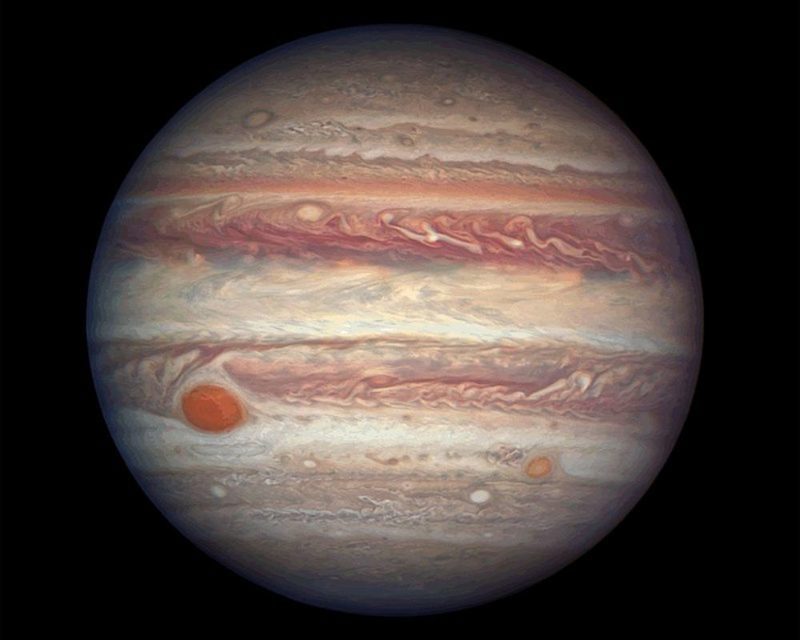
Jupiter already held the title of being the largest planet in this solar system, and now it has another claim to fame: having the most moons. The discovery of 12 new moons was recently published by the Minor Planet Center, pushing Jupiter into first place. These moons didn’t simply appear overnight, but until now, scientists haven’t ever observed their existence. That changed thanks to the Smithsonian Astrophysical Observatory, through which these celestial bodies were reportedly recorded. They were allegedly identified between 2021 and 2022, meaning they have actually been known for quite some time. However, scientists had to be sure they were orbiting Jupiter before confirming them as moons.
The new discovery pushes Saturn into second place
With the discovery of these new moons, Saturn has been dethroned as the planet orbited by the most celestial bodies. Apparently, 83 moons have been noted around this planet so far, although there’s the potential for more to be revealed. Supposedly, quite a few small rocks reported to be just a few miles long have been discovered orbiting Saturn. However, scientists need better equipment to effectively track these rocks to see if they function like all of the other confirmed moons. It may take time for technology to develop to allow this. However, when that day comes, it’s possible that Saturn may reclaim its spot from Jupiter. That’s assuming something doesn’t happen before then to send it back to the top.
These 12 new moons come with some notable characteristics
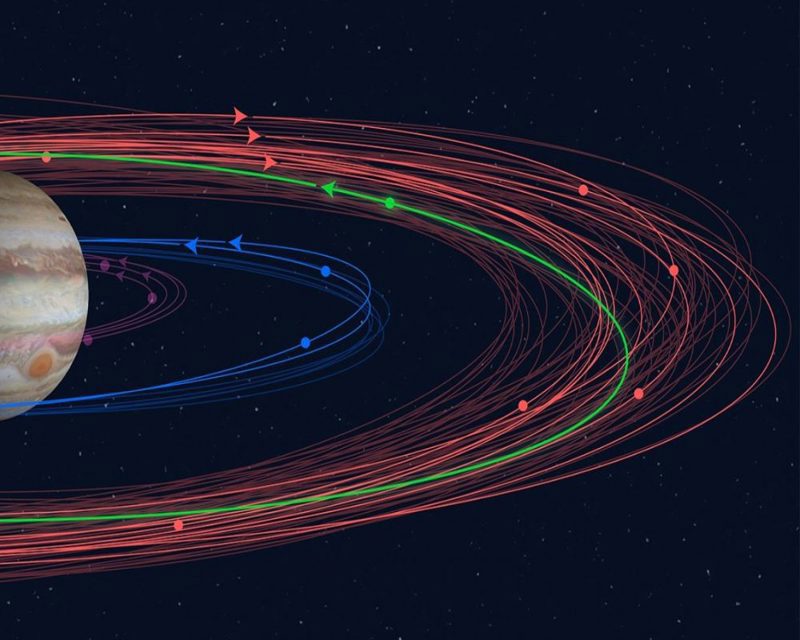
It takes around 27 to 28 days for the moon to orbit Earth, which is significantly quicker than it takes these new moons to orbit Jupiter, apparently. All of them reportedly require at least 340 days to make it around once, meaning nearly a year in our time. However, most of them allegedly need as much as 550 days or longer to orbit the planet. Moreover, the majority of them aren’t that big. Only a handful of them apparently span further than 5 miles, which is a contrast to the 2,100 plus long diameter of our moon. Something else that’s notable about these moons is the way that they orbit. Apparently, most of them move in the opposite direction of the planet’s rotation.
We live for the days when scientists make significant discoveries like this one, and we know such finds will probably never stop. After all, this universe is so expansive that there’s always new stuff for experts to identify and share with the world.
You May Also Like
 Education
The Difference Between Correlation and Causation
 Science
Why Some Studies Cannot Be Replicated
 Science
How to Tell a Breakthrough From a Press Release