How Self-Healing Materials Could Change Products
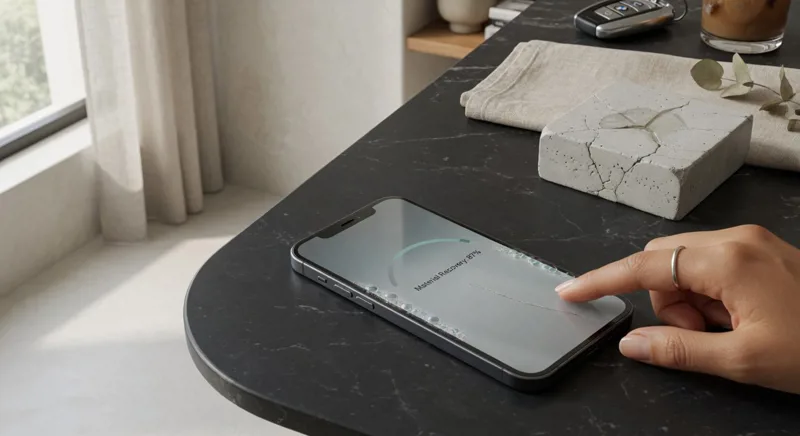
Imagine a phone screen that repairs tiny scratches, a bridge that seals its own cracks, or a car coating that restores itself after minor damage. How self-healing materials could change products comes down to one powerful idea: making everyday objects more durable, reliable, and easier to maintain.
What Are Self-Healing Materials?
Self-healing materials are engineered substances that can repair damage without conventional replacement or manual intervention. Depending on the design, they may respond to heat, light, pressure, moisture, or chemical reactions.
Some systems use built-in repair agents, while others rely on chemical bonds that can break and reform repeatedly. Researchers typically divide them into two broad categories:
- Intrinsic self-healing materials: The material itself contains reversible bonds or structures that reconnect after damage.
- Extrinsic self-healing materials: Capsules, hollow fibers, or vascular networks release a repair substance when cracks appear.
This technology is being studied for smart coatings, construction materials, flexible electronics, batteries, sensors, biomedical devices, aerospace components, and 3D-printed products.
How Self-Healing Materials Repair Damage
Microcapsule-Based Healing
In one common approach, tiny capsules filled with resin or another healing agent are embedded inside a material. When a crack reaches a capsule, it breaks open and releases the agent. The substance then hardens or reacts with a catalyst, sealing the damaged area.
This method can work well for protective coatings, adhesives, and composite materials. However, each capsule usually provides a limited amount of repair material, so repeated damage may eventually exhaust the system.
Reversible Chemical Bonds
Intrinsic materials use molecular bonds that can reconnect after being separated. Heat, light, or pressure may activate the process. Because the repair mechanism is part of the material itself, these systems can potentially heal more than once.
The challenge is balancing flexibility with strength. A material that heals easily may not be strong enough for demanding applications such as aircraft structures or heavy machinery.
Shape-Memory and Vascular Systems
Shape-memory polymers can return toward their original form after exposure to heat or another stimulus. Vascular materials, meanwhile, contain tiny channels that transport healing agents in a way similar to blood vessels.
These designs could support larger or more complex products, although manufacturing them consistently at commercial scale remains difficult.
How Self-Healing Materials Could Change Products
Longer-Lasting Consumer Electronics
Smartphones, wearables, tablets, and flexible displays are constantly exposed to scratches, bending, and small impacts. Self-healing polymers could help restore surface damage and protect delicate electronic layers.
Self-healing circuits may also make wearable devices more reliable. If conductive pathways repair small breaks, products could last longer and require fewer replacements. That could be especially useful for health monitors, electronic skin, and flexible sensors.
More Durable Cars and Aircraft
Automotive and aerospace manufacturers are exploring self-healing coatings and composite materials for exterior panels, structural joints, and electrical components. These materials could help limit the spread of small cracks caused by vibration, fatigue, temperature changes, or minor impacts.
For aircraft, even small defects can require costly inspections and downtime. A material that prevents damage from progressing could improve reliability, although it would not eliminate the need for safety inspections or professional repairs.
Self-Healing Concrete and Infrastructure
Concrete naturally develops small cracks over time. Water, salt, and chemicals can enter these openings, accelerating corrosion and structural deterioration.
Self-healing concrete may use bacteria, mineral-forming chemicals, superabsorbent polymers, or encapsulated agents to seal microcracks. Potential applications include:
- Bridges and highways
- Tunnels and retaining walls
- Dams and marine structures
- Foundations and high-rise buildings
By slowing water and chemical penetration, self-healing concrete could reduce maintenance work and extend infrastructure service life. Large-scale field performance, cost, and construction compatibility remain important evaluation criteria.
More Reliable Batteries and Energy Devices
Battery electrodes can develop cracks as materials expand and contract during charging cycles. Self-healing polymers and binders may help maintain electrical connections and preserve battery capacity.
This could support longer-lasting batteries for electric vehicles, smartphones, grid storage, and renewable energy systems. The material must heal without adding excessive weight, reducing energy density, or creating safety risks.
Better Medical Devices and Wound Dressings
Self-healing hydrogels and polymers are being studied for wound dressings, tissue engineering, drug delivery, and implantable devices. A dressing that conforms to a moving wound and repairs small tears could provide more consistent protection.
In medical applications, biocompatibility, sterilization, flexibility, and predictable healing are essential. Materials must also meet strict regulatory and safety requirements before widespread clinical use.
Benefits and Limitations
| Potential benefit | Current limitation |
|---|---|
| Longer product lifespan | Healing may work only for specific types or sizes of damage |
| Lower maintenance needs | Advanced materials can have higher production costs |
| Improved reliability | Some systems require heat, light, or another external trigger |
| Reduced material waste | Recycling and end-of-life processing may be complicated |
| Protection from corrosion and moisture | Performance can vary with temperature, pressure, and environment |
What Is Holding the Technology Back?
The biggest challenge is scaling laboratory breakthroughs into affordable, mass-produced products. Manufacturers must integrate self-healing features into existing production lines without sacrificing strength, appearance, safety, or recyclability.
Another concern is measurement. A product may appear healed while retaining hidden weaknesses. Engineers therefore need reliable standards for testing healing efficiency, durability, repeated repair, and long-term performance.
Self-healing materials also cannot repair every type of failure. They are most promising for microcracks, scratches, minor fractures, and surface damage—not major structural destruction.
The Future of Self-Healing Products
As material science advances, self-healing features may become a standard design consideration rather than a novelty. Products could be designed from the beginning to detect damage, trigger repair, and report their condition through embedded sensors.
The most successful applications will likely combine self-healing materials with predictive maintenance, smart sensors, recyclable components, and digital monitoring. Together, these technologies could create products that last longer while using fewer raw materials.
Conclusion
How self-healing materials could change products is ultimately a story about durability and smarter design. From self-healing concrete and battery electrodes to electronics, vehicles, medical devices, and protective coatings, the technology could reduce maintenance and extend useful product life. Its future depends on solving practical challenges involving cost, scalability, safety, recycling, and repeatable performance—but the potential to make products more resilient is substantial.
References
You May Also Like
 Education
The Difference Between Correlation and Causation
 Science
Why Some Studies Cannot Be Replicated
 Science
How to Tell a Breakthrough From a Press Release