What Makes a Material Biodegradable?
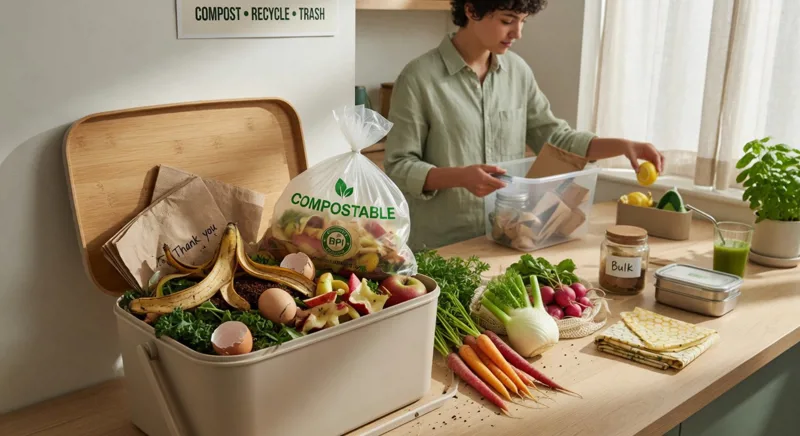
What makes a material biodegradable is its ability to be broken down by naturally occurring microorganisms into simpler substances such as water, carbon dioxide, biomass, and inorganic compounds. But biodegradability depends on more than a product’s ingredients—it also depends on time, temperature, moisture, oxygen, and the environment where decomposition occurs.
What Does Biodegradable Mean?
A biodegradable material can be decomposed through the natural activity of microorganisms, including bacteria, fungi, and algae. During this process, microorganisms consume parts of the material and convert them into simpler substances.
Common biodegradable materials include untreated paper, food scraps, cotton, wool, wood, and many plant-based products. Some biodegradable plastics are also designed to break down, although they may require specific conditions such as industrial composting facilities.
The word “biodegradable” does not automatically mean “environmentally harmless” or “quickly decomposes anywhere.” A material may biodegrade in soil but remain intact for a long time in seawater, a landfill, or a dry outdoor environment.
How Does Biodegradation Work?
Biodegradation is a biological process. Microorganisms release enzymes that break large molecules into smaller ones. The microorganisms then use these molecules as a source of energy or nutrients.
In an oxygen-rich environment, known as aerobic decomposition, the main byproducts are typically:
- Carbon dioxide
- Water
- Biomass
- Mineral compounds
In oxygen-poor or anaerobic environments, decomposition can also produce methane. This is one reason the disposal environment matters as much as the material itself.
Five Factors That Determine Whether a Material Biodegrades
1. Chemical structure
Microorganisms can digest some chemical bonds more easily than others. Natural materials such as cellulose, starch, proteins, and plant fibers are often accessible to biological activity. Highly stable synthetic polymers may resist microbial enzymes and remain in the environment for decades.
2. Moisture
Water helps microorganisms survive and move through a material. A dry environment can slow biodegradation dramatically, even when the material is technically biodegradable.
3. Temperature
Most microorganisms work faster in warm, suitable conditions. Industrial composting facilities use controlled temperatures to accelerate decomposition. By contrast, a biodegradable product placed in cold soil may break down much more slowly.
4. Oxygen availability
Some microorganisms require oxygen, while others function without it. The available oxygen influences both the speed of decomposition and the substances produced during the process.
5. Surface area and material thickness
A thin film or shredded item exposes more surface area to microbes than a thick, tightly compressed product. Coatings, dyes, adhesives, and blended materials can also slow down decomposition.
Biodegradable vs. Compostable: What’s the Difference?
Biodegradable and compostable are related terms, but they do not mean exactly the same thing.
| Term | Meaning | Typical requirement |
|---|---|---|
| Biodegradable | Can be broken down by microorganisms | Conditions and time may vary |
| Compostable | Breaks down into compost without harmful residue | Must meet defined conditions and performance standards |
| Biobased | Made partly or entirely from biological materials | Does not necessarily mean biodegradable |
Every compostable plastic is intended to biodegrade under appropriate composting conditions, but not every biodegradable material is compostable. Compostable products must disintegrate, biodegrade at an appropriate rate, and avoid negatively affecting finished compost.[1]
For example, a plant-based plastic may be made from renewable resources but still require a commercial composting facility. It may not break down effectively in a backyard compost bin, soil, or landfill.
What Makes Plastic Biodegradable?
Biodegradable plastic usually contains polymer structures that microorganisms can break apart more readily than conventional petroleum-based plastics. Some are made from materials such as starch, cellulose, polylactic acid, or other biodegradable polymers.
However, “plant-based” and “biodegradable” are not interchangeable. A plastic can be made from plants yet behave much like conventional plastic after disposal. Always consider the product’s certified disposal pathway rather than relying only on terms such as “green,” “natural,” or “eco-friendly.”
Commercially compostable plastics are designed for controlled industrial composting. In the United States, ASTM D6400 and D6868 are widely recognized specifications for products intended for municipal or industrial composting.[1]
How Is Biodegradability Tested?
Laboratories evaluate biodegradability under controlled conditions. Tests may measure how much of a material is converted into carbon dioxide, how quickly it disintegrates, and whether the remaining compost can support plant growth.
For compostable products, testing generally considers three questions:
- Does the product physically break apart during composting?
- Does it undergo substantial biological decomposition?
- Does it leave harmful residues or interfere with plant growth?
Some compostability standards require approximately 90% conversion of organic carbon within six months under specified conditions.[2] These results apply to the tested environment; they do not guarantee the same performance in every natural setting.
Common Misconceptions About Biodegradable Materials
- “Biodegradable means it disappears quickly.” Decomposition time can range from weeks to years, depending on the material and environment.
- “All biodegradable plastics belong in a home compost bin.” Many require the higher temperatures and controlled conditions of industrial composting.
- “Biodegradable products can be littered safely.” Disposal in nature can still cause pollution, harm wildlife, or persist for a long period.
- “Biobased means biodegradable.” The source of a material does not determine how easily it decomposes.
How to Choose and Dispose of Biodegradable Materials
Look for clear information about the intended disposal method. A trustworthy label should identify whether the product is designed for industrial composting, home composting, soil biodegradation, or another specific environment.
Check for recognized certification, follow local waste-management guidance, and avoid placing compostable packaging in recycling bins unless local authorities specifically accept it. When no suitable collection system exists, reducing consumption and choosing reusable products may have a greater environmental benefit.
Conclusion
What makes a material biodegradable is its ability to undergo natural microbial decomposition into simpler substances, but successful biodegradation depends on the right conditions. Chemical structure, moisture, temperature, oxygen, thickness, and disposal environment all matter.
The most useful question is not simply, “Is this material biodegradable?” Ask instead: Biodegradable under what conditions, within what time, and with what result? That distinction helps separate meaningful environmental performance from vague product claims.
You May Also Like
 Education
The Difference Between Correlation and Causation
 Science
Why Some Studies Cannot Be Replicated
 Science
How to Tell a Breakthrough From a Press Release