What Is The Deepest Lake In The World?

Lakes form some of the world’s most stunning natural wonders. Although they might just be a body of water, they’re still beautiful to look at. Plus, on a warm, sunny day, there’s nothing like having a picnic at a lake and swimming in the water to cool off. Of course, it’s always good to know just how deep a lake is before you go swimming in one.
While some of these can be shallow, others can extend quite far below the surface. They don’t reach the depths that the oceans manage, but that doesn’t mean you can’t still go a long way down. Of course, that begs the question: what is the deepest lake in the world? Thankfully, finding out the answer isn’t hard.
A body of water doesn’t have to be that big to be a lake
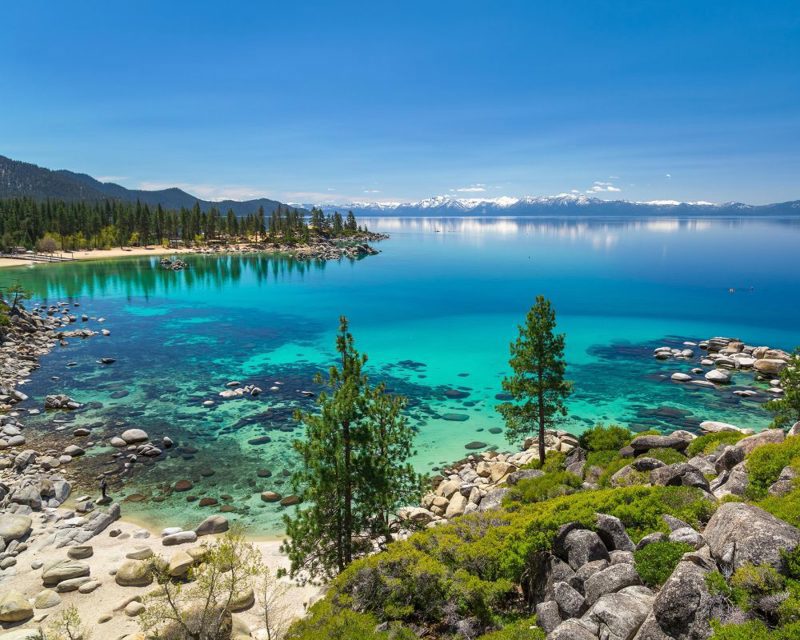
According to Uppsala University, there are more than 117 million lakes in the world. That may well be more than you were expecting, but there’s a good reason for this. When you think of lakes, you probably think of places like Lake Tahoe, Lake Superior, and Crater Lake. These are all large bodies of water, leading to the assumption that every lake must be as big as these. That’s not the case, though. In fact, a lake can be pretty small to be classed as such. There seem to be differing views over what size a body of water has to be for it to be classed as a lake. The 117 million reported by Uppsala University were all apparently half an acre minimum, which is actually pretty small. With so many lakes in the world, trying to identify the deepest one might seem like a tough job. However, someone has found the answer.
Lake Baikal is the world’s deepest lake in more ways than one
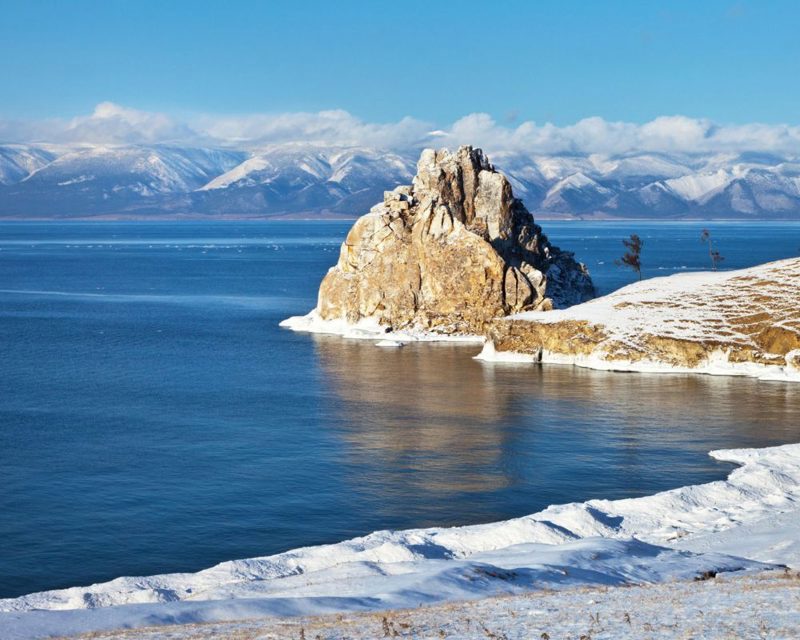
It seems that Lake Baikal is considered to be the deepest lake in the world. This body of water in southeast Siberia reportedly reaches depths of 5,387 feet, which is significantly more than somewhere like Lake Tahoe or Lake Superior. Although the average ocean depth is much deeper - reportedly 12,100 feet - we’d say that Lake Baikal is still very impressive. What’s more, this Unesco World Heritage Site is apparently deeper in several ways, which makes it even more noteworthy. Not only is its maximum depth greater than anywhere else, but its average depth also beats out any competition. This is reportedly 2,486 feet, which is larger than many of the world’s tallest manmade structures. To make Lake Baikal even more amazing, it’s allegedly 25 million years old and is home to some fish and seal species you won’t find anywhere else. That’s apparently why it’s earned the nickname of the “Galapagos of Russia.”
Should you ever find yourself in southeast Siberia, Lake Baikal might be a spot worth checking out. Of course, this part of Russia is known for being pretty cold, so maybe think carefully before you go swimming there. You don’t want to discover how deep this lake is for the wrong reasons.
You May Also Like
 Education
The Difference Between Correlation and Causation
 Science
Why Some Studies Cannot Be Replicated
 Science
How to Tell a Breakthrough From a Press Release