When Did Rome Really Fall?

There are former civilizations, and then there’s Ancient Rome. The society is still one of the most famous of all time, largely because it once ruled over such a vast amount of the world and introduced so many things that we still use today. However, like all things, Ancient Rome had to come to an end.
Still, there’s been a question on many people’s lips ever since: when did Rome really fall? For some, it was when emperor Romulus Augustulus abdicated, which many consider was the fall of the Western Roman Empire. Others? They argue that the empire lasted for centuries more until the Eastern Roman Empire finally collapsed. All in all, it’s left plenty of room for debate.
The Roman Empire once ruled much of Europe and the Middle East
The Fall of Rome has long been dated to the fall of the Western Roman Empire, but there was once a time that the Ancient Romans controlled so much of the world. For hundreds of years, the empire built up and up as they took land and inserted themselves into other cultures. In fact, it was around 100 CE that the Ancient Roman Empire was at its height as they stretched across Italy, most of Germany, France, Britain, Jordan, Israel, Egypt, and what is now Armenia, Romania, Iraq, and Spain. While they were once a united empire, the Romans later split into smaller, more manageable dwellings, resulting in the Eastern and Western Roman Empires. Still, one thing was for sure: Rome was always the capital and “eternal” city.
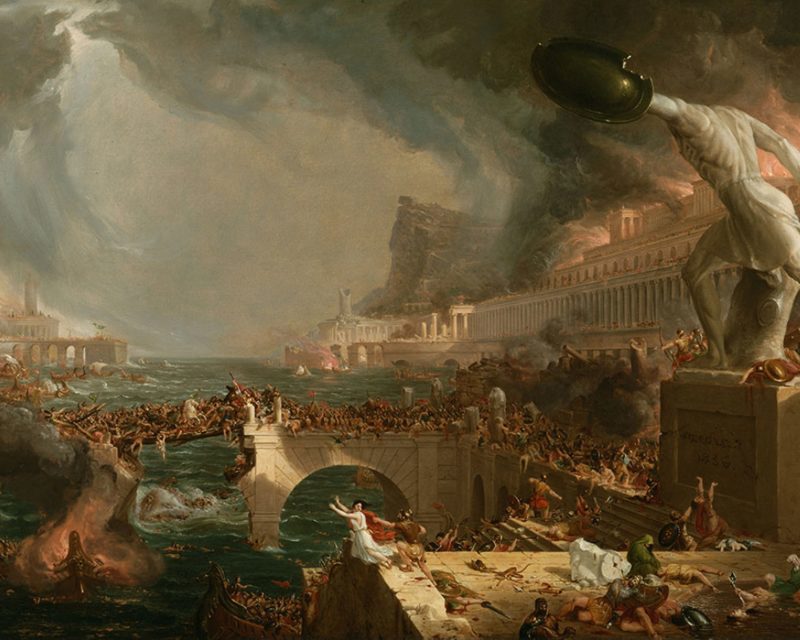
Losing the city of Rome is what many deem the end of Ancient Rome
Being such a major part of the Roman Empire means many historians view losing the city of Rome as the thing that marked the Fall of Rome. That moment came on August 24, 410 CE, when the Visigoths - Western Goths - overthrew the city. It was the first time in almost 800 years that someone had pulled it off, and it all started when the Visigoths fled the Huns from Eastern Europe at the start of the fourth century. The Battle of Adrianople in 378 CE saw the Visigoths overthrow the Roman army, resulting in them being given land on the Romans’ northern border to guard and control in case of invaders. Just a few decades later, the empire decided it was time to invade Italy, taking over Rome two years later in 410 CE. Even though the Roman Empire was already spread across the world, everywhere was still incredibly protective of the sacred heart of it all, with losing Rome coming as a massive blow to Roman settlements across the planet. Still, the Visigoths withdrew a few years later, leaving all of the incredible buildings completely untouched.
The fall of the Western Roman Empire is what others consider the fall of Rome
Losing Rome in 410 CE was one thing, but other historians argue that it was actually the fall of the Western Roman Empire several decades later that was the real fall. That moment came on September 4, 476 CE, when the first barbarian king of Italy, Odoacer, forced emperor Romulus Augustulus to abdicate his leadership. The emperor was just 16 years old at the time, with Odoacer once serving the Eastern Roman emperor and vowing he would take control of the Western side. Still, Odoacer didn’t end Augustulus’ life and instead sent him to live with relatives and a pension. As for the new barbarian king, he ruled over the Western Roman Empire’s land and people until 493 CE before a battle ended his life. Ultimately, Theodoric the Great took his place, leading a new, powerful kingdom across Italy as a result.
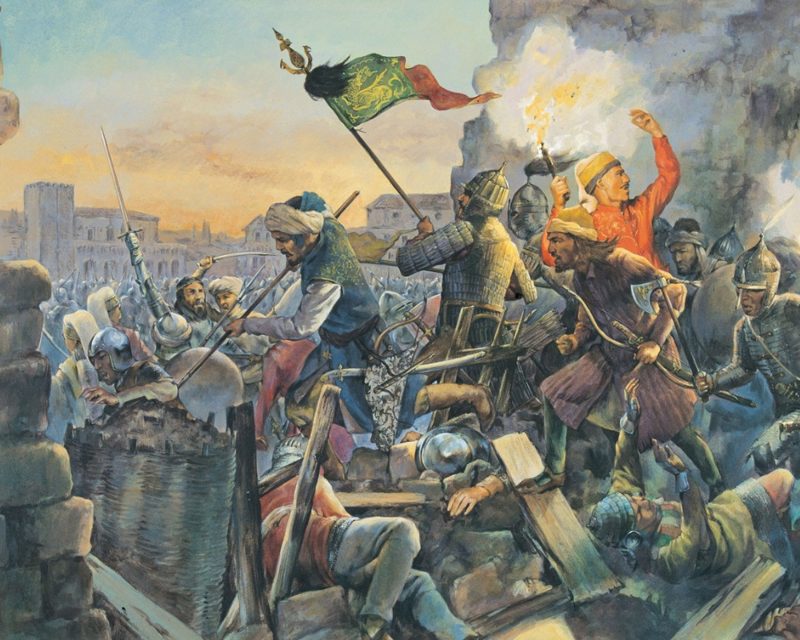
Losing the Eastern Roman Empire might have been the final fall of Rome
While the Western Roman Empire was going through plenty of changes and ups and downs, the Eastern Roman Empire largely stayed away from the battles and upset. Instead, they were largely living in Constantinople, now known as Istanbul. The Greek city of Byzantium was destroyed before emperor Constantine the Great rebuilt it from the ground up in 330 CE, with the Eastern Roman Empire using Constantinople as their “New Rome.” This raged well into the sixth century CE, but things changed when 632 CE rolled around. Arab invasions raged for almost three decades, with the army capturing parts of Anatolia, the Levant, and Egypt from the Eastern Roman Empire. Taking three-quarters of the territory and the empire’s revenue ultimately hit the Eastern Roman Empire hard, meaning they went from ruling such a large part of the globe down to just a tiny region until they were almost entirely wiped out.
When did Rome really fall? It depends on who you ask. If you think it’s when the Roman Empire lost Rome, it comes much earlier in time, in 410 CE. Still, if it’s when all aspects of the empires lost complete control of their land and revenue, it might not be until the Arab army dominated entirely in 661 CE. It’s certainly an interesting historical debate.
You May Also Like
 Education
The Difference Between Correlation and Causation
 Science
Why Some Studies Cannot Be Replicated
 Science
How to Tell a Breakthrough From a Press Release