Why Is Mercury The Most Unusual Of Our Solar System's Planets?

Mercury is notable for being the first planet in our solar system. Also, because it’s far closer to the sun than the Earth, it only takes around 88 days for it to orbit the burning star. That means that a year here is equivalent to more than four years there. This is just the tip of the iceberg when it comes to what there is to know about Mercury, though.
It turns out that this is quite an odd celestial body, perhaps one of the most bizarre in the entire solar system. Why is Mercury the most unusual of our solar system’s planets, and why are things this way? It seems that other planets may be to blame for everything.
Mercury is a small planet, but it’s also incredibly dense
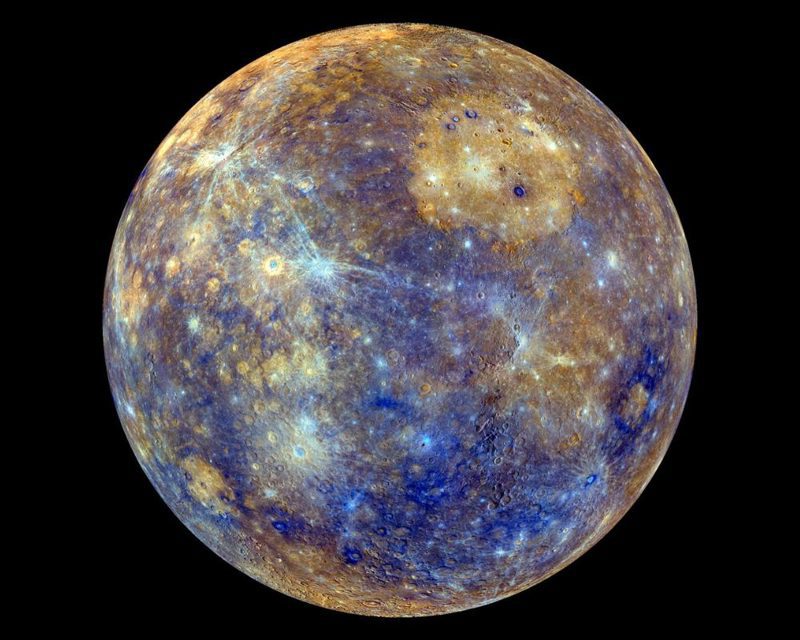
For the average person, Mercury isn’t that notable. It isn’t discussed much, so the only thing they necessarily remember is that it’s closer to the sun than Venus, Earth, Mars, and the rest of the planets. However, there is plenty worth noting about this celestial body, like the fact that it’s incredibly dense, even though it’s much smaller than other planets. No planet in the solar system is smaller than Mercury, which has just 5.5% of the Earth’s mass and volume. However, despite the size difference, the density between the two is almost identical. This is reportedly down to Mercury’s core, which covers 85% of the planet’s radius. It’s a much more significant percentage than Earth, where the core is around half of the radius.
The movement of other planets may have affected Mercury’s size
The fact that Mercury is a small planet with a large core has apparently confused scientists for years. However, developments are gradually being made to explain why the celestial body is so unusual. Regarding the smaller size, this is likely due to a lack of material in the early protoplanetary disk that led to Mercury’s formation. According to simulations that astronomers have done, these disks tend to be thinner around the inner edges because of the influence of the sun. What’s more, there probably would have been more material available if it weren’t for the other planets. Apparently, they formed closer to the sun than they are now before effectively pulling each other away with their gravitational influence. In doing this, they supposedly removed material that could have benefitted Mercury.
Mercury’s dense core might be explained by past collisions
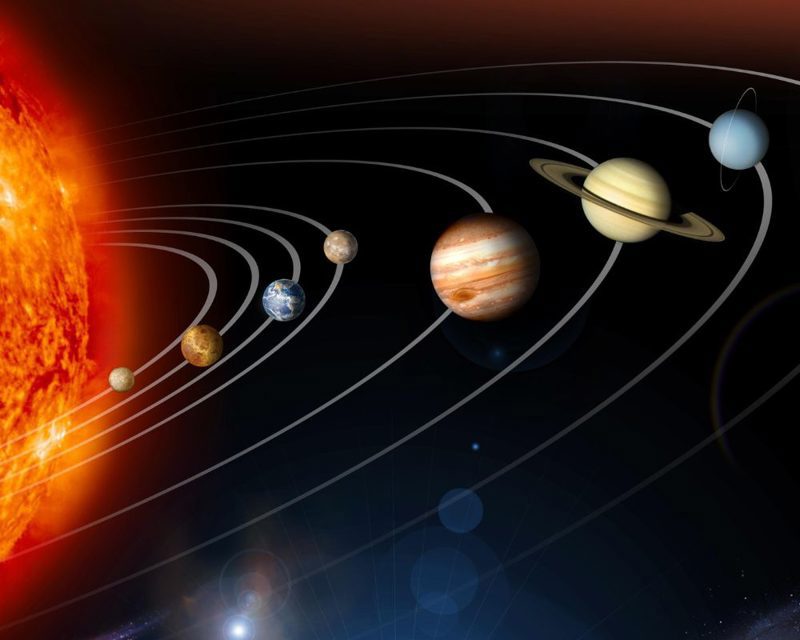
The movement of planets and a lack of material could explain why Mercury is as small as it is. However, it doesn’t clear up why the core is so large. Apparently, this could be down to collisions with other planetesimals and protoplanets. Although the movement of the other celestial bodies in our solar system may have removed materials, it didn’t get rid of everything. Consequently, young Mercury experienced many violent collisions with objects of a similar size. Each of these collisions left behind the heavier elements that you find in planetary cores while removing some of the lighter layers. Every time this happened, Mercury would have gotten denser without necessarily becoming much bigger. That’s the theory that researchers have at the moment, anyway.
The truth behind Mercury’s unusual size and density still isn’t fully understood. While these explanations make sense on paper, scientists have struggled to create an accurate simulation that results in the right size and density for the planet. Still, progress is being made, and until the research says otherwise, this is the best answer we have for why Mercury is the way that it is.
You May Also Like
 Education
The Difference Between Correlation and Causation
 Science
Why Some Studies Cannot Be Replicated
 Science
How to Tell a Breakthrough From a Press Release