Students Could Be About To Beat NASA To The Moon

When it comes to space, NASA is the agency we tend to turn our attention to. After all, they've made so much progress over the years, from sending people to the moon to getting satellites far out in our solar system. So, when it comes to huge discoveries, they're usually the ones behind it. However, that may be about to change.
Although NASA has plans to land a robotic rover on the moon - something the US has never done before - someone else could be about to beat them to the punch. Surprisingly, it's not another organization like the European Space Agency, but rather some students from Carnegie Mellon University. How have they managed to potentially beat NASA to the punch?
The Iris rover is set to reach the moon in May 2023
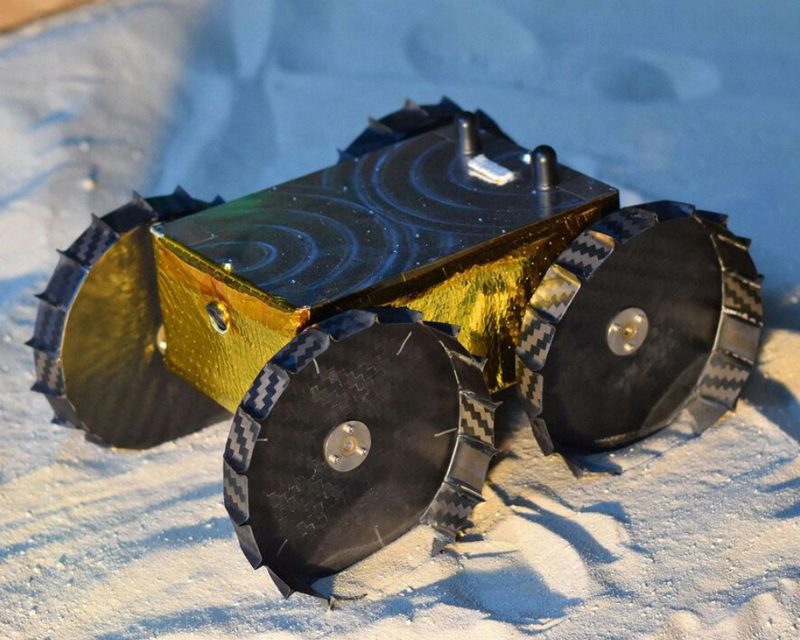
In May 2023, the United States' first autonomous rover is set to land on the moon. With this on the surface, scientists will finally be able to explore more of this celestial body from close range without having to send people up there. Apparently, this was all supposed to happen a few years ago, with the initial launch scheduled for late 2021 at the earliest. Unfortunately, setbacks meant that it was delayed, with this spring finally the time for the Iris rover to touchdown on the moon. When it lands, it will be a huge accomplishment for the US, which has previously only managed to get astronaut-driven rovers up there.
The rover was made by students through one of NASA's programs
While NASA is usually responsible for the United State's space projects, the Iris rover is actually the work of students, faculty, and alumni from Pennsylvania's Carnegie Mellon University. They spent three years creating the rover that will help to further space exploration for the nation. That doesn't mean NASA hasn't had any involvement, though. While those at Carnegie Mellon University might have made the rover, it was created through NASA's Commercial Lunar Payload Services program. This has seen NASA fund various commercial companies to help make huge steps in progress regarding the moon.
The Iris rover will go to the moon alongside a time capsule
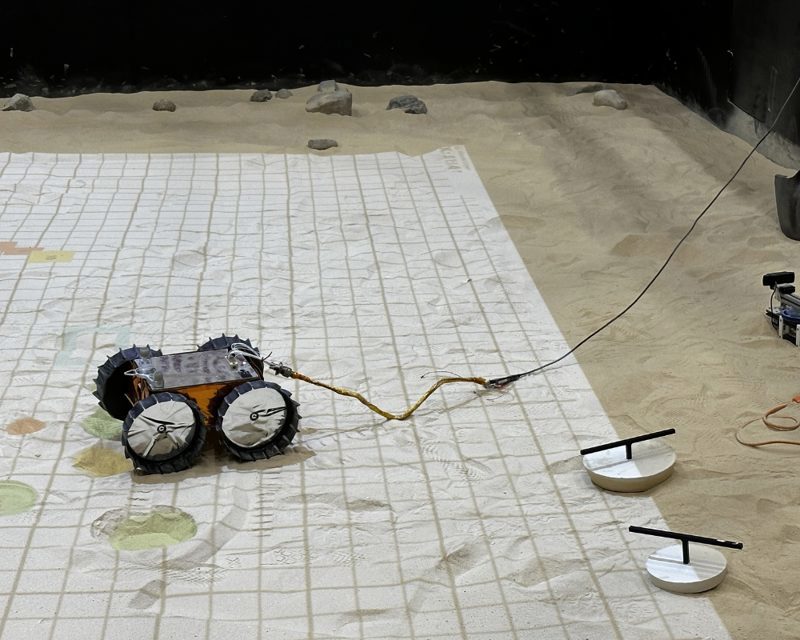
When the Iris rover reaches the moon, it will reportedly have two tasks. The first of these is to take photos of the moon for scientists to study, while the second is to test new localization techniques. Set to last 60 hours, this shoebox-sized machine will reportedly move around on carbon-fiber wheels that have been designed like bottle caps. Alongside the rover, a time capsule will also go up to the moon, which the team from Carnegie Mellon University has filled with objects, music, poems, and pictures. Referred to as MoonArk, the aim of this is apparently to convey a narrative that both people now and in 1,000 years should find moving.
When the Iris rover launches, hundreds of students will be hoping for a safe journey for the machine they devoted thousands of hours to. While there's never a guarantee that things will make it to the moon in one piece, we have everything crossed that this particular mission will be a success.
You May Also Like
 Education
The Difference Between Correlation and Causation
 Science
Why Some Studies Cannot Be Replicated
 Science
How to Tell a Breakthrough From a Press Release