What Would The Earth Look Like With 1,000 People?

You might need to use your imagination a little but think about a world where something happens, and most of the population is wiped out for good. We’re not talking about some kind of zombie apocalypse. Oh no, this is a situation where most of the eight billion people around the world simply disappear.
In their wake, 1,000 people are left. Somehow, they discover how to find each other - don’t think too hard about it - and they have to set up a new civilization. What would the Earth look like with 1,000 people? Spoiler alert: very different from the one we know.
Hardly anyone would be a farmer
In 2019, just 27% of the population were farmers, with only 2% of Americans taking up the profession. Even then, a lot of it relies on current technology. With just 1,000 people on Earth, there’s a good chance a mere 270 would be farmers - or at least capable enough to grow food.
There would likely be one hunter-gatherer
Being a hunter-gatherer is easier said than done. In fact, with just 0.125% of the world’s population coming from a hunter-gatherer background, that would equal a mere one person - if they were lucky - in a world with just 1,000 people. In other words, a fresh catch isn’t looking likely.
It’s likely one doctor would survive
Of course, you want to look after yourself as one of the remaining 1,000. You might want to book that appointment early as the current number of doctors sits at 1.6 physicians for every 1,000 people. There’s a chance there could be just one doctor left, but what if they’re a specialist?
One person would act as a trained soldier
Many dream about a world with no war, but what about one with no soldiers? Amazingly, just 0.35% of the population is an active soldier, meaning there may or may not be one left in a world of 1,000 people. In any case, there would be one or two veterans.

There would be plenty of disabled individuals
1.6 billion people - or 20% of the population - live with some form of disability. In a world of 1,000 people, that would come out to 200 individuals, with, as horrible as it sounds, some wondering how long they would last when supplies are already running short. Then again, they could be wrong.
It would be tough for people to communicate
With more than 7,100 languages, it might be little surprise people would struggle to communicate with 1,000 people. Even the most widely spoken language, English, would leave just 190 speakers, with 140 speaking Chinese instead. Things would only work if they agreed on a universal language - and fast, as multiple languages wouldn’t be necessary.
People would likely belong to one of three faiths
A population of 1,000 would mean most would be religious, with 310 being Christian, 230 would be Muslim, and 150 would be Hindu. Although there would be other religions left, their numbers would likely be nothing compared to the major three.
Most won’t know how to swim
Swimming might be one of the key skills we need to survive, but just 55% of the population over 15 years old knows how to swim. Even in a world with a young population, there’s a good chance they haven’t learned to swim yet and would leave a few hundred who could.

Young people would greatly outweigh the elderly
Right now, the average age of a person is 30 years old, with 52.8% of the population sitting between 0 and 19. Those over 65? They make up 4.8% of the population. Those numbers alone show a world of 1,000 people would probably be on the much younger side.
There would be a bottleneck in the population
To start, a world of 1,000 people would be pretty diverse, with 590 hailing from Asia and 180 from Africa. However, just 93 would be from Europe and 47 from North America. Eventually, there would be a genetic bottleneck as interbreeding becomes more prevalent, and any new introductions to the gene pool are long gone.
Job specialization would no longer matter
One of the biggest and most immediate changes that would come from a population of 1,000 is the lack of need for job specialization. Even having the skills to make something in exchange for food only works in large groups, meaning people would no longer need to perfect their individual skills.
1,000 people would be great for the planet
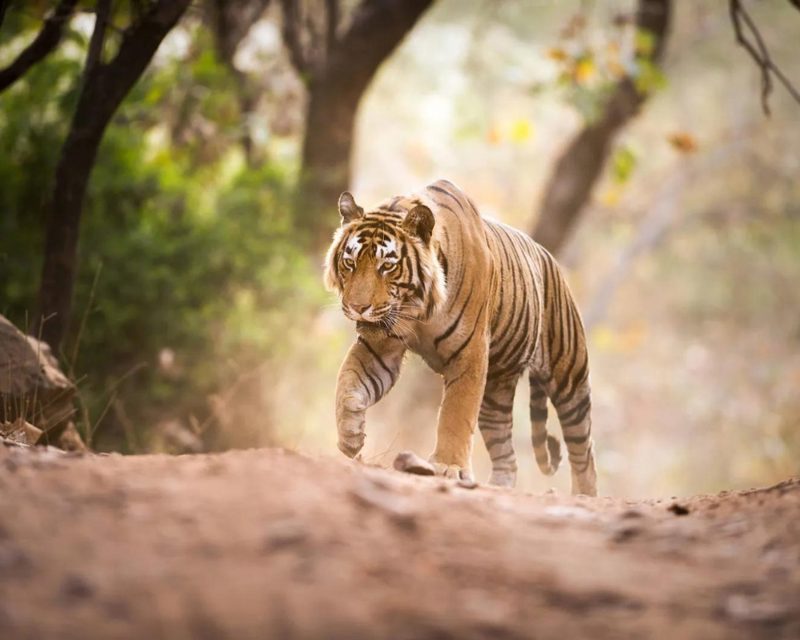
With so few people, Earth really could recover properly. Rainforests would return, and wildlife would flourish, thanks to the lack of emissions and intervention. Domestic animals would likely fade away, while wild animals would likely thrive, and those living alongside humans - like rats and seagulls - might suffer population shocks.
What would the Earth look like with 1,000 people? In short, it would be unlike anything any of us have ever - or likely will ever know.
You May Also Like
 Education
The Difference Between Correlation and Causation
 Science
Why Some Studies Cannot Be Replicated
 Science
How to Tell a Breakthrough From a Press Release