It Turns Out That Spiders Might Dream
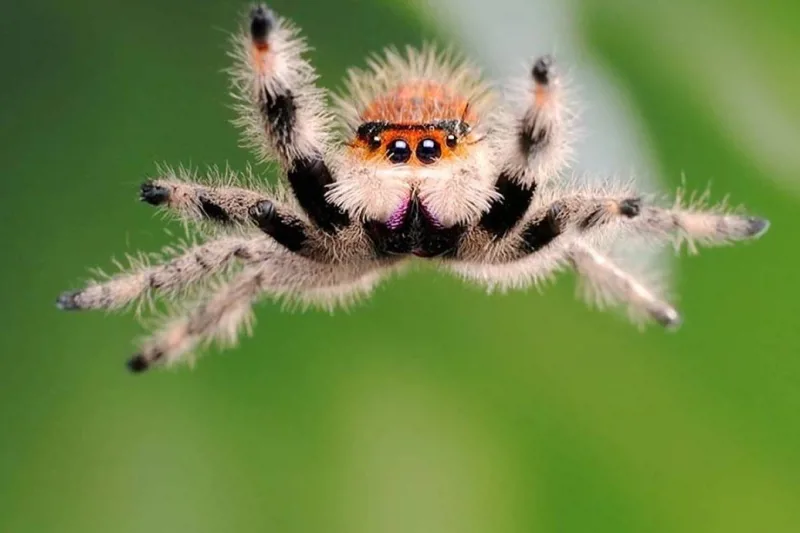
Many people view spiders as terrifying creatures that don't resemble humans in the slightest. After all, they have more legs, can climb walls, and purely exist to give us nightmares. Well, maybe that last point is up for debate. Nevertheless, there aren't many people who would seriously compare humans and spiders in the same sentence. Why not, though?
As bizarre as it may seem, there are actually some similarities between the two. For instance, it turns out that spiders might dream just like the rest of us. A new study has reportedly found that jumping spiders display sleeping patterns akin to humans, indicating they may actually have dreams. Does that make them more or less terrifying? The jury is still out.
Researchers noticed that jumping spiders' legs sometimes twitched while they slept
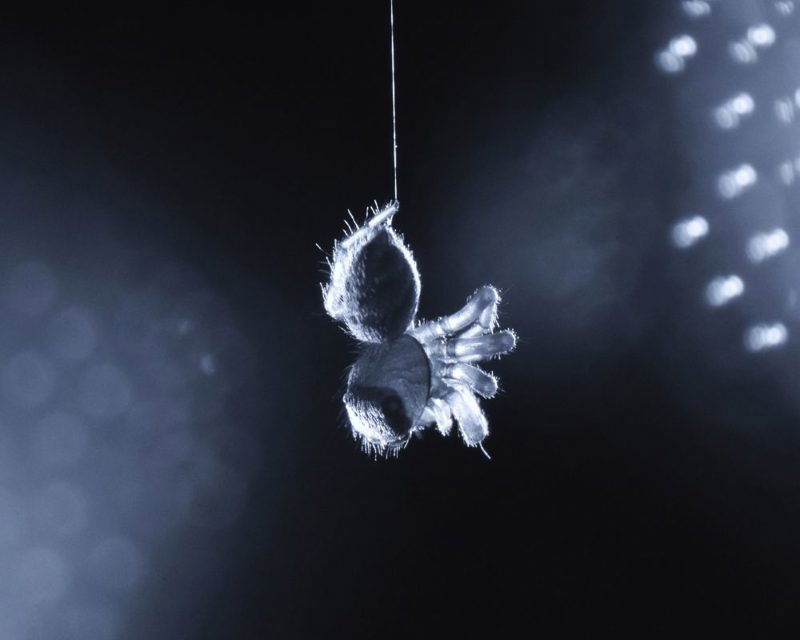
Not many people would probably want to spend time examining how spiders sleep. However, in order to better understand the creatures that we share this planet with, this sort of research is essential. So, a group of scientists decided to set up cameras that recorded jumping spiders while they slept. The videos reportedly showed the arachnids sleeping suspended from a thread while their legs occasionally twitched in the night. While that might sound slightly terrifying, it's no different from what a dog might do in their sleep, just with more legs. This was apparently a sign that the spiders were experiencing rapid eye movement (REM) sleep.
The research came about by chance in the middle of another experiment
It turns out that the researchers weren't initially looking to identify the sleeping patterns of jumping spiders. Instead, they were reportedly focused on how the creatures would react when faced with 3D printed models of predatory spiders. However, when lead author Daniela C. Rößler happened to watch them one night, she was stunned by how still they were. She apparently thought they'd passed away until she noticed the twitching. This sporadic, repeated behavior throughout the night seemed reminiscent of how other animals sleep, prompting her to question the nature of their sleeping patterns.
Eye movements in juvenile spiders also indicated REM sleeping patterns
It wasn't just leg movements that indicated a possible match between the sleeping patterns of humans and spiders. When Rößler and her team recorded several dozen juvenile spiders sleeping, they noted that there were "unmistakable eye tube movements." The notable thing about these spiderlings is that their exoskeletons are initially translucent, meaning such movements can be tracked when their eyes are closed. These matched with the leg twitching, further cementing the possibility of REM sleep. Although the team couldn't confirm the eye movements of the adult spiders, there was apparently no evidence of any change between the younger and older specimens.
Confirming if spiders dream will require further complicated research
Of course, just because these spiders might experience REM sleep, that doesn't necessarily mean they dream. To know that answer for sure, Rößler and her team apparently need to broaden their research to brain scans. That's easier said than done, given how small the brain of a jumping spider is. Trying to insert an electrode into a brain that can be the size of a poppy seed without crushing it is a tough undertaking. So, until scientists find a way to achieve that, we won't be able to answer the question: do spiders dream? However, with the evidence available so far, it definitely seems possible that spiders dream. Rößler is fairly confident that they do, and she's more informed than most about this.
For now, we'll just have to convince ourselves that spiders do dream until we receive confirmation otherwise. After all, it humanizes these creatures that many are terrified of, which can go a long way to making them less scary. That's got to be a good thing, right?
You May Also Like
 Education
The Difference Between Correlation and Causation
 Science
Why Some Studies Cannot Be Replicated
 Science
How to Tell a Breakthrough From a Press Release