Destinations Mars Tourists Could One Day Explore
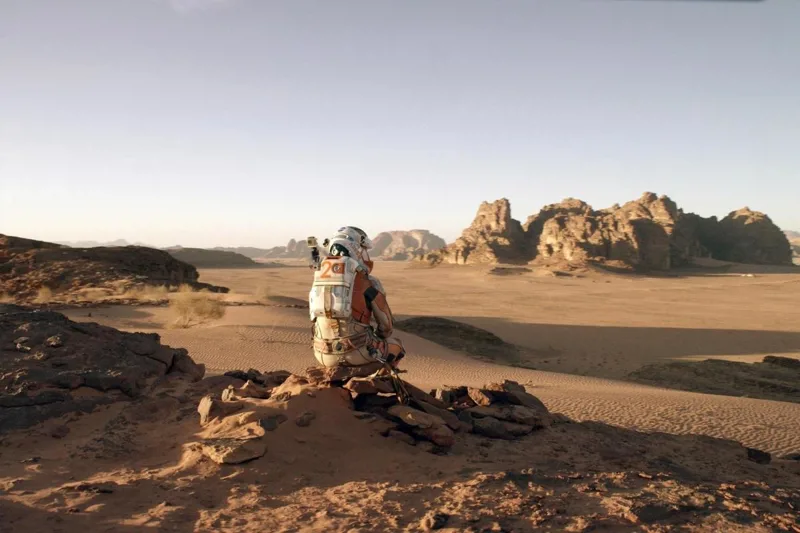
The race to get to Mars is on. Billionaires, space crews, and scientists across the world are now on their next leg of the space race as everyone wants to be the first to step foot on the Red Planet. For years, there has been talk about making it to Mars, but what if it’s now closer than ever before? That’s what plenty of people think.
While some estimate we won’t see people on Mars until the 2040s, others think it could only be a few years away. Whatever the case, it hasn’t stopped people from thinking ahead, such as what they can explore once they’re there. The destinations Mars tourists could one day explore certainly show there’s a lot more to the Red Planet than meets the eye.
Mount Sharp and Gale Crater are proof there was water on Mars
One of the biggest things that have been discussed since humans started investigating Mars is the presence of water. Believe it or not, but Mount Sharp and Gale Crater both prove it was once on the Red Planet. Gale Crater has evidence scattered along the floor that was discovered by the Curiosity rover just weeks after it landed in 2012. Now, the rover is investigating the nearby Mount Sharp to uncover any more clues about water that could have once covered the planet.
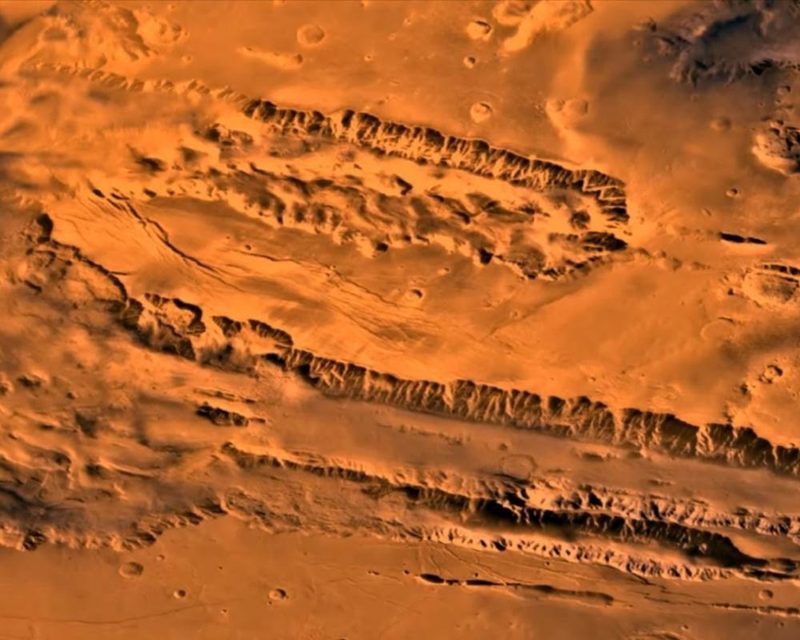
Valles Marineris is larger than the Grand Canyon
The Grand Canyon is a site to behold. What if Mars tourists could one day explore something four times larger? That’s right; the Valles Marineris could be the largest canyon in our solar system at an estimated 1,850 miles long. So far, researchers have no idea how it was formed. However, some believe that it’s to do with volcanoes in the area. Once the lava started flowing, they theorize it pushed the crust up and broke other parts into fragments, leading to the formation of the Valles Marineris.
Medusae Fossae has sparked UFO rumors
It can be tough to talk about space to many without questioning the existence of life on another planet. Medusae Fossae has certainly got many wondering if a UFO once crashed into Mars. That’s because of its strange appearance, which covers an area around one-fifth the size of the US. However, researchers believe it is more likely to be from volcanic deposits teamed with high winds across Mars.
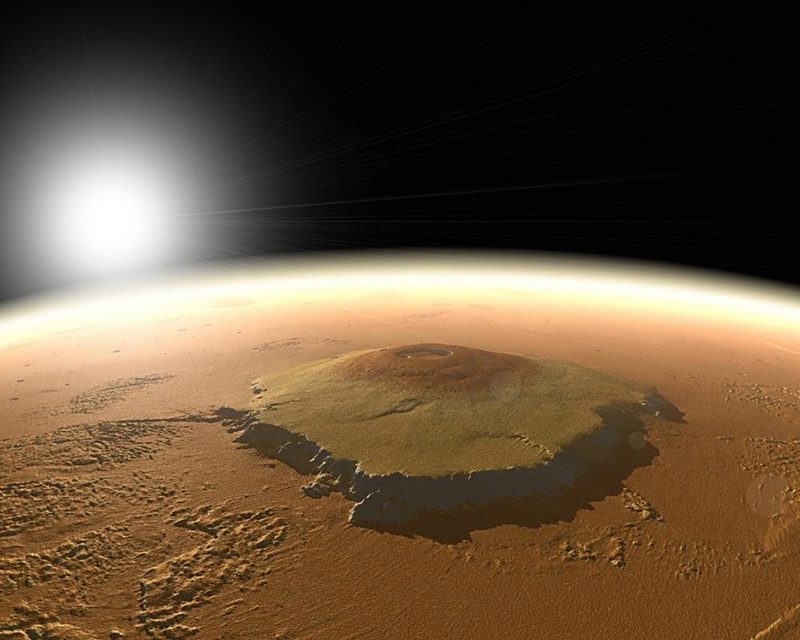
Olympus Mons is an extreme volcano
If you want to see the most extreme volcano found in the solar system, then look no further than Olympus Mons. Mars tourists could one day explore the area that’s home to a volcano the same size as Arizona. It’s also around three times taller than Mt. Everest, with Olympus Mons coming in at 16 miles high. Still, it doesn’t slope too much. It’s believed this is all thanks to lava that once slowly slid down the slope, complete with a 53-mile-wide depression that was likely caused when the top collapsed after an eruption.
Tharsis Volcanoes are 12 more volcanoes
Mars tourists will already be in the Tharsis Volcanoes area from exploring Olympus Mons, so why not take it all in? This is made up of 12 giant volcanoes that spread over 2,500 miles. The volcanoes are mostly larger than any found on Earth, believed to be thanks to the lower gravitational pull on the Red Planet, meaning they could grow higher. The Tharsis Volcanoes could have also erupted for half the lifespan on Mars, around two billion years.
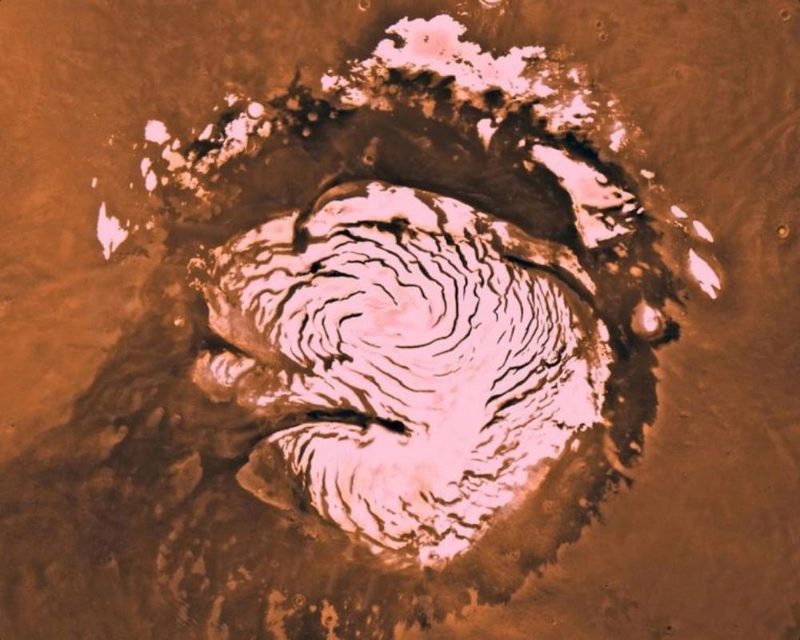
The North and South Poles are much like Earth’s
Just like Earth, the Red Planet has North and South Poles, which could one day be a popular trip for Mars tourists. However, they’re a little different. For one, temperatures here get so cold that they freeze the carbon dioxide in the atmosphere. This means it turns into ice across the surface, which then melts and reenters the atmosphere in the summer.
Getting to explore Earth is a dream plenty have on their bucket list. What about getting to see another planet? While it could still be many decades off, there are plenty of destinations Mars tourists could one day explore that are almost too incredible to be true.
You May Also Like
 Education
The Difference Between Correlation and Causation
 Science
Why Some Studies Cannot Be Replicated
 Science
How to Tell a Breakthrough From a Press Release