What Causes Tornadoes To Start?

Just because they might look it, it turns out that no two tornadoes are the same. They are one of the more extreme weather phenomena we see, with around 1,200 hitting the US alone each year. While not all tornadoes leave devastation in their wake, there have been some that have completely changed an area forever once they pass through.
From losing homes and loved ones to seeing entire neighborhoods gone in seconds, tornadoes can do millions, if not billions of dollars worth of damage in a matter of minutes. That’s before even getting to the emotional damage they leave behind. So, what causes tornadoes to start? It turns out there’s more to it than it seems.
Stage one: A storm begins to develop
Tornadoes are more typical in certain parts of the world, and a lot of that is down to heat. When the sun heats the ground, the air just above the ground starts to warm up, too. From there, pockets of warm air - called thermals - begin to isolate and rise into the air, leading to the formation of shallow cumulus clouds. If the temperature surrounding these clouds rapidly decreases, the warm bubbles might rise to much greater heights than they should and develop much stronger currents of ascending air - called updraughts. If this happens, it can lead to what so many of us know as thunderclouds.
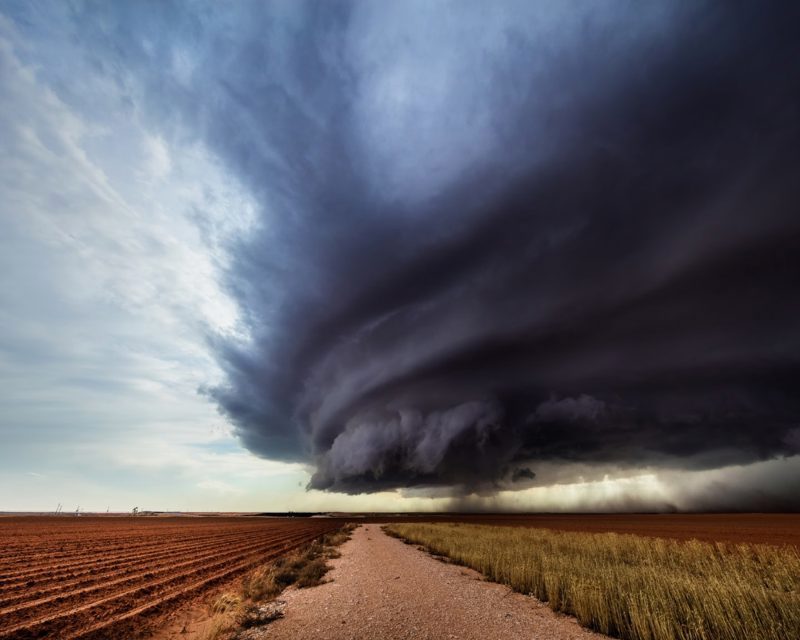
Stage two: The storm begins to organize
Most of the time, the rising thermals merely lead to a storm. However, if things change and the winds increase strongly much higher in the air, the thunderstorm may begin to rotate. This is because the strong wind shear begins to create a horizontal spin in the atmosphere. The strong updraught can then tilt the rolling motion until the storm is rotating vertically. If the storm remains at this stage and doesn’t develop a full tornado, these deep rotations merely become supercells.
Stage three: Tornadoes are formed
Supercell storms are just the beginning, but if descending currents of dense, cold air start to form within the supercell, it could concentrate the rotation much lower to the ground and bring it toward the Earth. Eventually, the rotation might become so strong and focused on one point that it causes a column of violently rotating air. Still, it’s only when this column reaches the ground that it officially becomes a tornado. The tornado is usually visible to people because of the condensation funnel - a cloud that forms due to the reduced pressure found within the middle of a tornado. From there, the tornado will pick up dust and debris, making it even more visible to the world.
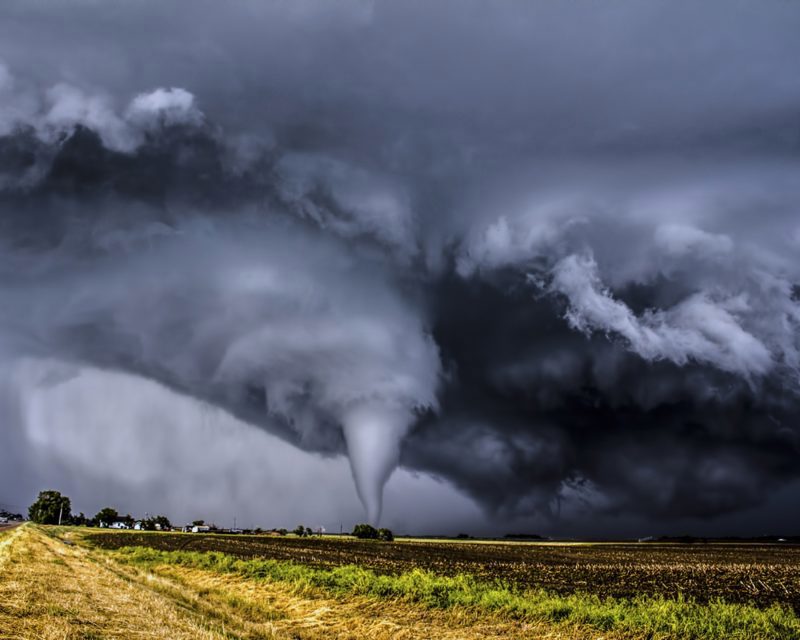
Stage four: The tornado dissipates
Most tornadoes usually only last between five and ten minutes, with some disappearing almost as quickly as they appear. However, some can be longer-lived and last for several hours, with the storms traveling anywhere between one and 50 miles during their run. During this time, tornadoes can be strong enough to rip up houses, trees, powerlines, and anything else that stands in their way. However, the final stage of a tornado happens when cold downdraughts begin to wrap around the storm. These cut off the warm air that keeps it turning, with the tornado narrowing as a result. Eventually, the vortex will completely disappear, and the tornado will be gone.
Tornadoes can be terrifying, but not every single one will have devastating effects. In fact, after learning what causes tornadoes to start, it appears they might be a lot more common than they seem - they just don’t leave a lasting impression.
You May Also Like
 Education
The Difference Between Correlation and Causation
 Science
Why Some Studies Cannot Be Replicated
 Science
How to Tell a Breakthrough From a Press Release