Unusual Origins Of Everyday Items Around The Home
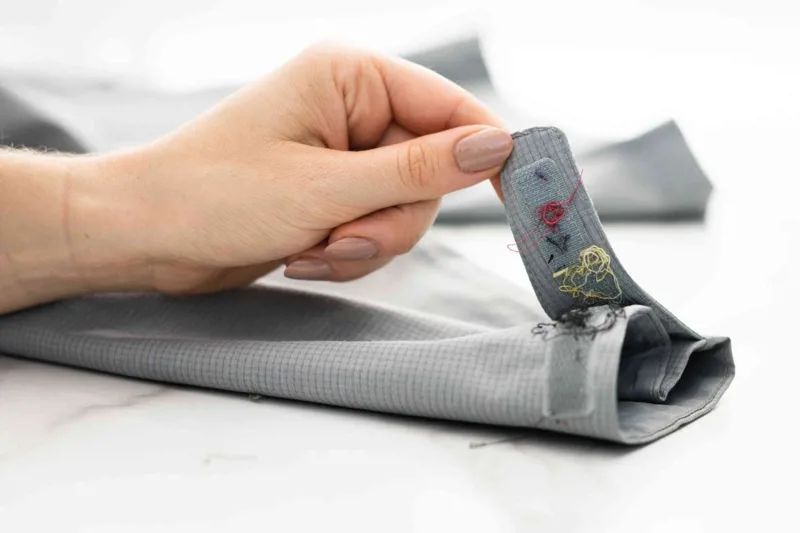
Let’s face it; there are hundreds of things that most of us use every day without giving them too much extra thought. However, there was once a time when these things never existed. So, where did they come from? How did someone think of them all? Were they inspired by a problem, or was it all an accident?
It turns out that the unusual origins of everyday items come in all shapes and sizes. From people trying to make one thing only to make another to people looking for inspiration from nature and everything in between, there’s no shortage of interesting tales about how some items came to life.
Velcro was inspired by burrs from a walk in the woods
If you’re wondering who invented Velcro, look no further than George de Mestra. He was walking through the woods when he noticed all the annoying burrs stuck to his clothes. It wasn’t until he looked closer that Mestra realized they were stuck because of tiny hooks. This inspired him to make a synthetic version, and he got to work with a manufacturer in France. Although it took a while to catch on, Velcro has since gone on to spread across the world and has even been used for things like NASA space missions.

The Boy Scouts helped to invent barcodes
Okay, the Boy Scouts themselves might not have invested barcodes, but it was teaching the scouts Morse Code that did. N. Joseph Woodland was a Boy Scout as a child and wanted to effectively track his products and keep them organized in a way similar to Morse Code. Apparently, it wasn’t until he was at the beach and poked four of his fingers in the sand that things came to life. Woodland spoke to Smithsonian Magazine, where he confessed that drawing four lines with his fingers made him realize he could make them thicker and thinner. Woodland teamed up with Bernard Silver to create what we now know as the modern barcode.
Air conditioning was to initially cool printing presses
Nowadays, many can’t imagine trying to make it through the day without air conditioning. What if we told you it wasn’t actually meant to be used in homes at all? Instead, it was created to help keep printing presses cool. Engineer Willis Carrier was behind it all as he needed to keep the humidity and temperatures down at a printing plant to ensure the machines ran smoothly. It wasn’t long before others caught on to the idea and decided to implement the invention in homes and offices across the world.

Smoke detectors were invented by accident when gas detectors failed
Did you know that smoke detectors have been around since the late 19th century? Still, a large part of their investigation was down to Walter Jaeger - and it was all an accident. He had been working on something that could detect poisonous gas, but nothing seemed to work. It was only when Walter had smoke in the room that his device started to work, and he realized that’s what it was detecting this entire time. It took decades to create the ones that so many of us have in our homes today, but they’ve been in the works since that fateful day.
Just because we use some things every day doesn’t mean they have always been a part of this world. In fact, the unusual origins of everyday items go to show that sometimes, accidents or unexpected inspiration can lead to the most helpful of inventions.
You May Also Like
 Education
The Difference Between Correlation and Causation
 Science
Why Some Studies Cannot Be Replicated
 Science
How to Tell a Breakthrough From a Press Release