What's The Biggest Spider On The Planet?

Some animals mean what they say in the title. Others? They’re a little misleading. After all, jellyfish aren’t actually a type of fish. Anteaters eat a lot more termites than they ever do ants. Ringworm isn’t a worm and is instead a type of fungus. Even flying foxes are a type of bat instead of foxes with wings.
So what’s the biggest spider on the planet? That title goes to the Goliath birdeater, but even this might be a little misleading - kind of. It sure is a giant, and there’s a good reason it’s known as the biggest spider in the world. However, it’s the birdeater part of this arachnid’s name that might not be quite right.
The Goliath birdeater spider is the largest spider on the planet
Having a leg span that grows around 12 inches wide and weighing as much as a hockey puck means that the Goliath birdeater spider is the biggest spider on the planet. While its body falls slightly short of the huntsman spider, the leg span means this giant tarantula stands above the rest. Thankfully, most of us will never have to worry about encountering one in the wild. That’s because they’re native to rainforests found across northern South America, where they have truly made the land their hunting ground.
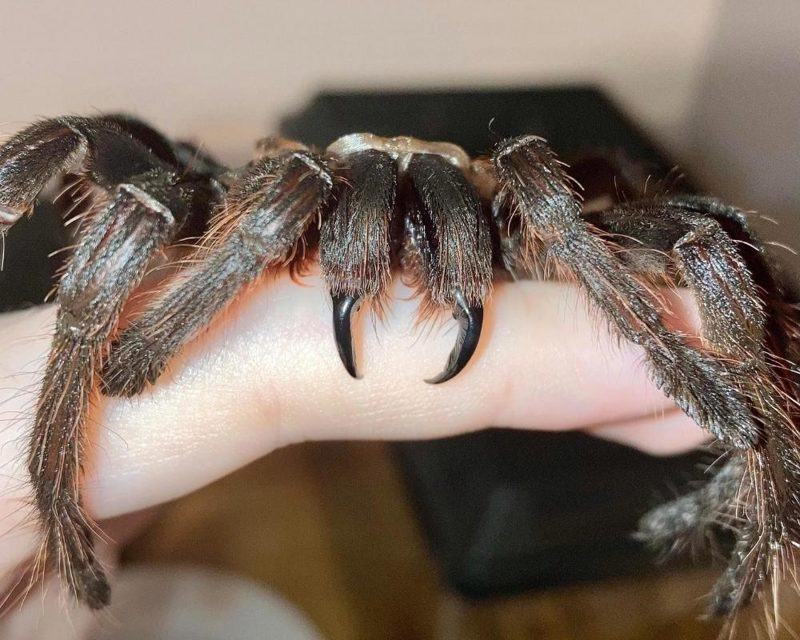
Their venom is relatively harmless to humans
Believe it or not, but it’s not the venom that we need to worry about when it comes to the Goliath birdeater spider. In fact, most things don’t need to worry. They have large fangs which could easily pierce a human’s skin if required. However, they don’t tend to use this as a defense. Even if someone were to be bitten by the biggest spider on the planet, they would likely only feel pain equivalent to a wasp sting. It’s only small creatures that risk losing their lives to these giant arachnids.
It’s the Goliath birdeater’s hairs that are dangerous
It turns out the Goliath birdeater relies on hair missiles to keep away potential danger. If a curious creature happens to come too close, these spiders rub their back legs along their abdomen to shoot hairs out in all directions. These cause a lot of irritation, particularly to humans who have a lot less protection on their skin. Once they get into someone’s eyes, these hairs are likely enough to see someone run in the other direction. As if that wasn’t enough, the noise is loud enough that it can be heard from around 15 feet away.
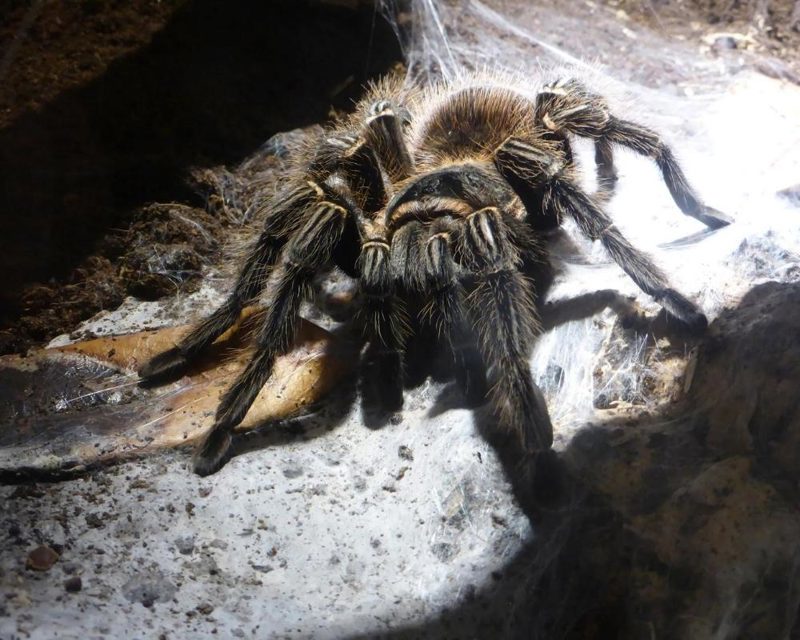
They don’t usually eat birds
The Goliath birdeater spider is the biggest spider on the planet, but its name might be a little misleading. That’s because they rarely eat birds. That’s not to say they don’t, as they will if they get the chance. Instead, they don’t make webs and hunt along the forest floor. Here, they’re more likely to come across lizards, mice, frogs, and insects. Goliath birdeaters tend to try their luck with anything smaller than themselves and will use their fangs to inject the venom to let neurotoxins do their work. Once something’s caught, the spider drags its prey back to a burrow, where its insides turn into a liquid lunch that’s sucked out once the neurotoxins have finished. Nice.
It turns out the Goliath birdeater spider is the biggest spider on the planet by a long shot, but we might not have to worry. In fact, unless we get shrunk down to something smaller than the arachnid, we should be pretty safe so long as we stay away from their shooting hairs.
You May Also Like
 Education
The Difference Between Correlation and Causation
 Science
Why Some Studies Cannot Be Replicated
 Science
How to Tell a Breakthrough From a Press Release