Mount Everest Is Covered In More Wildlife Than We Realized
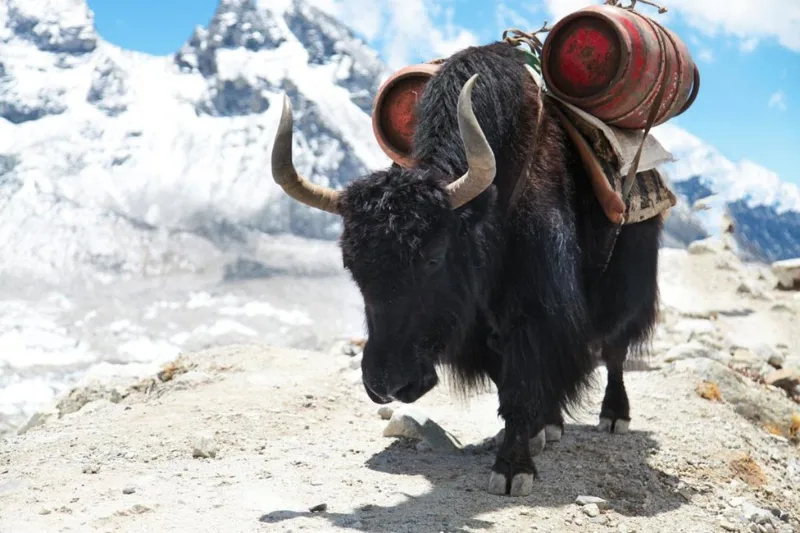
Mount Everest is the tallest mountain in the world, standing over 29,000 feet high. Believe it or not, but it’s thought that Mount Everest is over 60 million years old and was formed when the continental plate under India crashed straight into Asia, creating the Himalayas - and Everest.
As if that wasn’t enough, Mount Everest continues to grow a little over one inch every year. Being so tall and so dangerous means that even today, not much is known about the things that call the place home. That hasn’t stopped people from trying to find out, and it turns out that Mount Everest is covered in more wildlife than we realized.
A 2019 exhibition aimed to prove there is life on Mount Everest
In 2019, Tracie Seimon was one of many researchers who headed to Mount Everest to look for wildlife living on the mountain. The team, the Perpetual Planet initiative, wanted to see if they could uncover if anything is living on Mount Everest - and it didn’t take long to find the evidence they needed. Of course, the low oxygen levels, intense storms, and subzero temperatures have led many to believe that Everest is a barren land filled with nothing but snow and ice. Now, it seems it could be the complete opposite.

Researchers collected environmental DNA to study samples
One of the many ways the research team looked for wildlife living on Mount Everest was by collecting environmental DNA. This is the kind of DNA that’s left behind in the soil, water, and air when animals live in the area. Unfortunately, not having much knowledge of what animals live on Mount Everest meant the team couldn’t track the DNA all the way down to the specific animal. However, they did prove that 16% of taxonomic orders living on Earth currently live on the mountain.
Several flying insects were found living on Mount Everest
Just because they couldn’t classify every animal on Mount Everest didn’t mean they struggled to name all of them. It turns out that rotifers and tardigrades - two microscopic creatures who have been known to survive in space - are just some of the many found across the mountain. On top of this, the research team discovered a host of mayflies, butterflies, and several other flying insects across Mount Everest, on top of a host of plants, bacteria, and fungi.
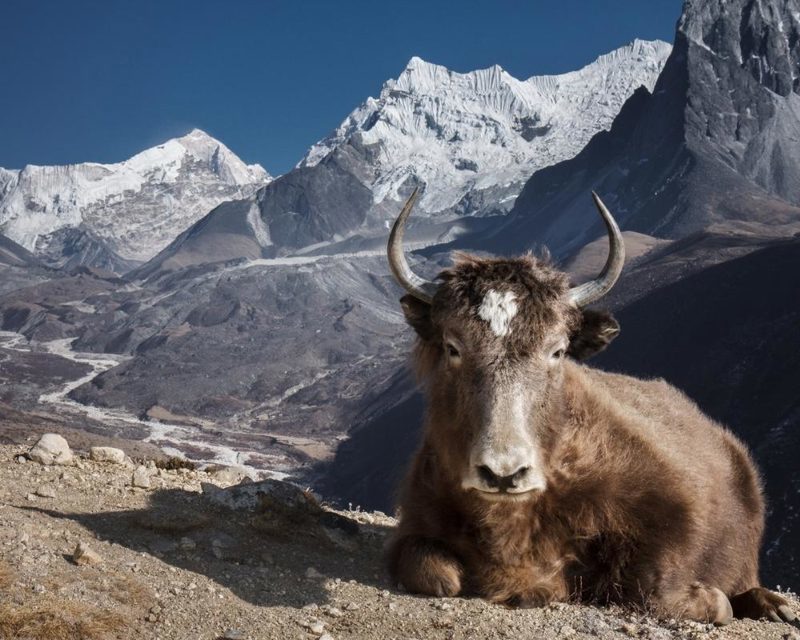
Classifying animals on Mount Everest will help with future studies
What would be the point of classifying animals on Mount Everest? There are lots of reasons. For one, it means that we can finally learn what calls the place home and what has been hiding up there for all these millions of years. There’s also the fact it means that researchers will be able to track what happens to wildlife living on Mount Everest going forward. Having a base of what lives on the mountain will show if things continue to thrive or if they’re dwindling in years to come, which can also be used to track the effects of climate change.
Mount Everest is covered in more wildlife than we realized, and it seems this could mean huge things for the future. While there is still a long way to go to classify everything the team has discovered in recent years, it’s the first step in the right direction.
You May Also Like
 Education
The Difference Between Correlation and Causation
 Science
Why Some Studies Cannot Be Replicated
 Science
How to Tell a Breakthrough From a Press Release