When Did We Start Shaking Hands?

What do you do when you meet someone new? How about when you close a deal at work? How about congratulating someone? There's a good chance the answer to all of those questions is you shake their hand. You're not alone, but the more we think about it, the more we can't help but wonder the same thing: when did we start shaking hands?
After all, the idea of grabbing someone else's hand and pulling it up and down is a little odd the more we step back and take a look at it all, but it's something that feels like it's been around forever. It turns out there's more history to the handshake than meets the eye.
Shaking hands initially appears to be an ancient tradition
If you cast your eyes across history, you might have noticed that a throne base that once belonged to Assyria's Shalmaneser III from the 9th century BCE shows two people clasping hands. There have also been other mentions from around that time that talk about people clasping hands to pledge their faith to one another. So, it's an ancient tradition, yes? Not quite. Historians have been pouring over books and records for years, only to notice that handshaking as a greeting didn't appear until around the mid-19th century when it was considered something that should only be used among friends. So, what happened?
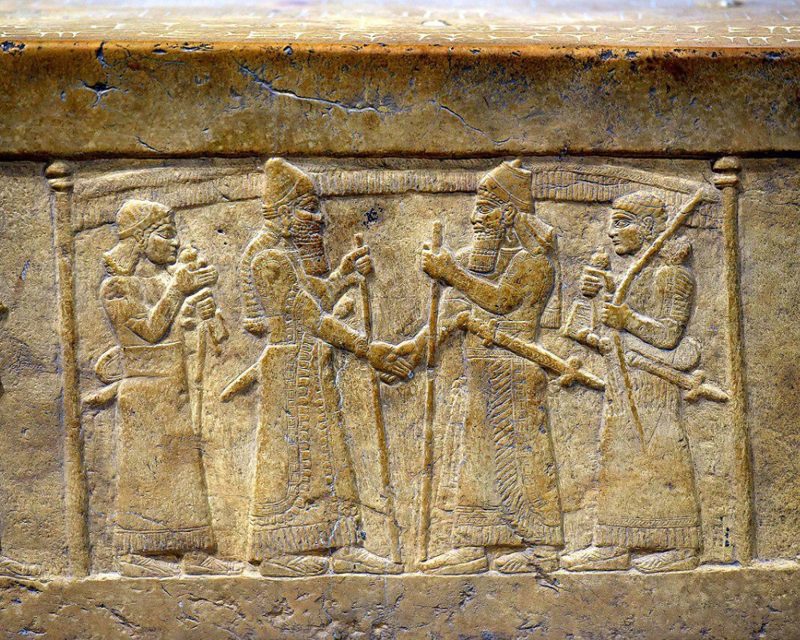
The origin of shaking hands as a greeting is hard to trace
The idea of shaking hands in BCE years seems to be tied to making deals or burying any feuds of the time. The idea of using it as a way to greet someone is something else entirely, with people still questioning if the Quakers were the ones to give us the greeting after all. One of the earliest clues that we shook hands to say hello comes from a 16th-century piece, but others argue the translation is the thing to add in the part of shaking hands. Still, there is another example from an author called James Cleland from 1607. It's believed he was from Scotland but lived in England and stated that rather than kissing hands or bowing. He would instead use the "good olde Scottish" gesture of “shaking [the] two right hands togither [sic].”
Handshaking might have disappeared in favor of more traditional greetings
One theory as to what happened to shaking hands as a greeting is that people started to use more traditional methods of greeting one another and utilized bowing across Europe instead of the handshake. As the centuries progressed, bowing became the popular choice, with only places like small Dutch towns opting to use handshakes as a way to settle disputes. Around this time, the Quakers - who were known to value equality - also started to use shaking hands instead of bowing. As the hierarchies continued to deteriorate, handshakes became more popular as people were looking for a more equal way to greet everyone.
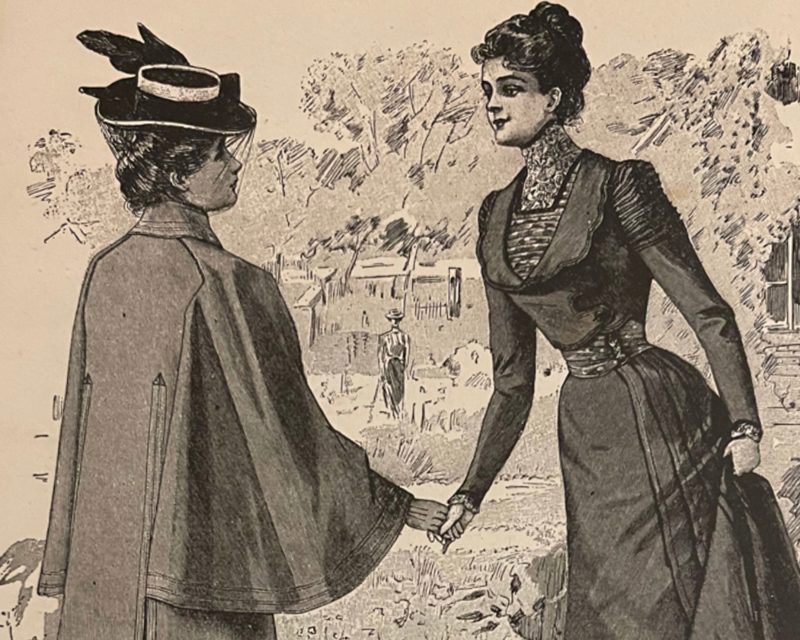
Not everyone was impressed with the idea of shaking hands
Just because shaking hands became popular once more didn't mean everyone was ready to accept the changes. In one text from 1870, it says that shaking hands while wearing gloves could be enough to hide a weapon. This was joined in the same century by the thought that shaking hands while wearing gloves was one of the rudest things you could do, and you must always apologize. Then, in 1884, a piece about France claimed that the handshake was "a vulgar English innovation" and they should stick to more traditional greetings instead.
Just because not everyone was pleased with the idea of shaking hands didn't mean they could stop the greeting that eventually spread across the world. While the handshake has a tricky history to track, it seems there's a lot more to the greeting than many people ever realized.
You May Also Like
 Education
The Difference Between Correlation and Causation
 Science
Why Some Studies Cannot Be Replicated
 Science
How to Tell a Breakthrough From a Press Release