Why Do People Think The Number 7 Is Lucky?

When people want things to go in their favor, they sometimes rely on luck to help them out. They might wear a certain article of clothing or do a specific action that they believe will influence their fate. We could spend days arguing about whether or not luck actually exists and if it truly affects the outcomes of various events. At the end of the day, though, the fact is that millions of people believe in the power of it.
Many of those people also believe that various numbers can be lucky or unlucky, with seven often considered one of the former. Why do people think the number seven is lucky? After all, it’s not a physical thing that can influence the world around it. It turns out there could be more to it than meets the eye.
Seven has been a prominent number in stories spanning thousands of years

Stories of the power of seven have been around for thousands of years. For instance, there’s the tale of the Pleiades constellation - also known as the “seven sisters” - which speaks of how Zeus transformed his daughter into these stars to protect her. Although that specific story stems back around 2,500 years, versions of it have apparently existed in other societies for potentially 100,000 years. Religion is also full of the number seven and has been for centuries, too. That includes Christian tales of God making the world in seven days, the seven steps to enlightenment in Hinduism, and the belief in Islam of walking around the Kabba seven times. Surely, all these references to seven can’t be a coincidence, right?
Psychology also suggests a connection between humans and the number seven
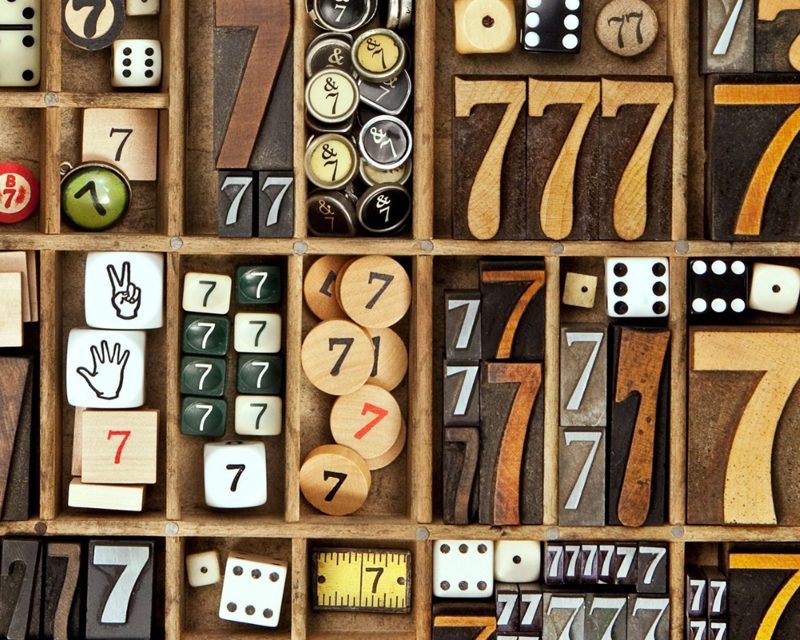
It’s certainly hard to overlook the impact of seven when you consider what Keith Devlin of Stanford University previously had to say about the number. Apparently, humans often hit a cognitive limit of seven when they try to capture objects in their field of view. It seems that our perception can only go so far before our brains start to struggle. The fact that Devlin had this to say on July 7, 2007 only adds to the power of seven. Moreover, a study in Psychological Review claims that “seven plus or minus two” is how many things people can keep in their working memory. Evidently, the neurological link between humans and this number is strong. Perhaps that’s why so many stories from the past seem to highlight it as such an essential number.
Why do people think the number seven is lucky? You could probably make some form of argument for the importance of any number if you searched for evidence hard enough. However, there’s no denying that seven seems to have had an impact on humans for so much of our history. We’re not sure if that makes the number lucky or not, but its persistence certainly explains why we might choose it over any other.
You May Also Like
 Education
The Difference Between Correlation and Causation
 Science
Why Some Studies Cannot Be Replicated
 Science
How to Tell a Breakthrough From a Press Release