A Computer Made From Human Brain Cells Is Doing Incredible Things

Technology is constantly making leaps and bounds, but it’s hard to deny just how far we have come in the last century or so. In fact, even the previous few years have really changed the way we live our lives, with the addition of smartphones, AI, and smart speakers really showing us what life in the future can be like.
However, it seems that things recently have gone even further than anyone imagined. This isn’t straight out of a sci-fi movie; a computer made from human brain cells is doing incredible things - and really could be where we are heading next in the world of tech.
Researchers want to bridge the gap between organoids and AI
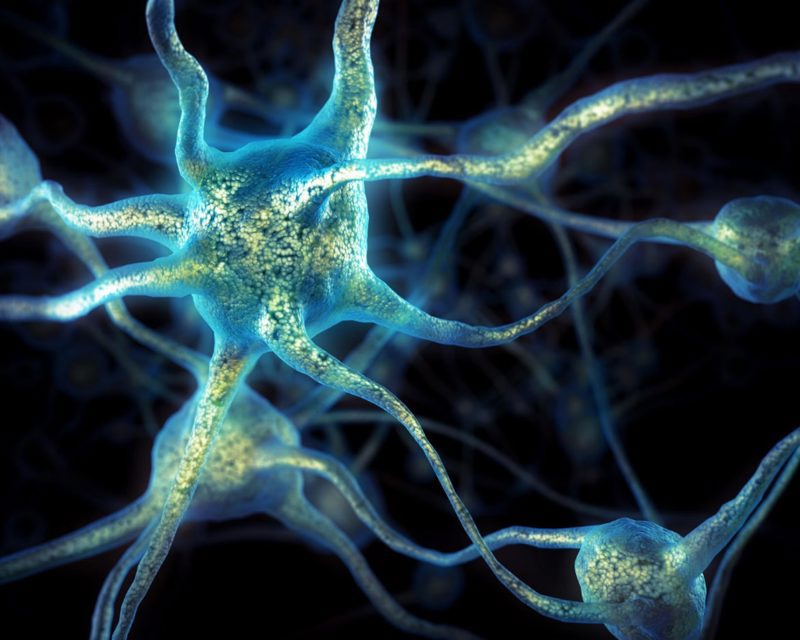
AI has been the talk of the world for the last several months, but what about combining that technology with the human brain? While no one is walking around with a chip in their heads just yet, researchers have published a paper in the Nature Electronics journal stating they have morphed bundles of human cells - known as organoids - into neurons before pairing them up with electronic circuits. Together, this new system has been called Brainoware. Feng Guo, a co-author of the paper, admits that they want to “bridge between AI and organoids,” meaning that the human brain will have better efficiency and speed when it comes to processing information.
The Brainoware could eventually do incredible things
Right now, the Brainoware is still in the very early stages, but it’s already doing incredible things. For one, it was fed data in the form of electric pulses through a plate made from thousands of electrodes so that it could be decoded, and it wasn’t long before it spat out its own taught algorithm. The team also tested the Brainoware’s ability to recognize individual voices. This time, they fed it 240 recordings from eight people speaking, with the audio translated before it was sent to the organoid. Each speech was met with a different reaction, with the team learning that the Brainoware was able to pinpoint who was initially speaking a whopping 78% of the time. Eventually, the team hopes that the Brainoware can be used to create biological computers that can perform tasks instead of the conventional AI that we are so used to seeing, all while giving scientists another way to study the human brain.
It could be a while before there are more big advances
Things have come a long way for the Brainoware, but it could be a while before there is another major breakthrough in the research. After all, creating something on a small scale is one thing, but scaling it up to ones that are large enough to complete complex tasks might prove to be complicated. As well as the lengthy process that’s needed to create a larger Brainoware, there is also the expense that comes with cultivating the cells. Still, if the team is successful, there is every chance that the Brainoware could be used to discover previously missing parts of research about the brain, such as neurological disorders like Alzheimer’s, perhaps even helping work toward a cure for the ailment.
A computer made from human brain cells is doing incredible things, but only time will tell how quickly it can be recreated on a larger scale. Even so, the fact this is even possible in the first place shows just how incredible the technology of the world is today.
You May Also Like
 Education
The Difference Between Correlation and Causation
 Science
Why Some Studies Cannot Be Replicated
 Science
How to Tell a Breakthrough From a Press Release