How Can They Tell What The Milky Way Looks Like?

If you look for a picture of the Milky Way online, you'll find estimations of what our galaxy looks like. Some people may never question that because they've grown up just knowing that this is what you'd see if you traveled far enough away from Earth. How can we accept this as fact, though, when no one has ever left the galaxy before?
As of now, not even a probe sent by space agencies like NASA has gone so far as to leave the Milky Way. Yet, we still have an idea of how it looks. To understand why that is, we need to look back at how our understanding of the galaxy has changed over the years to answer the question, how can they tell what the Milky Way looks like?
Understanding of the Milky Way has been developing for centuries now
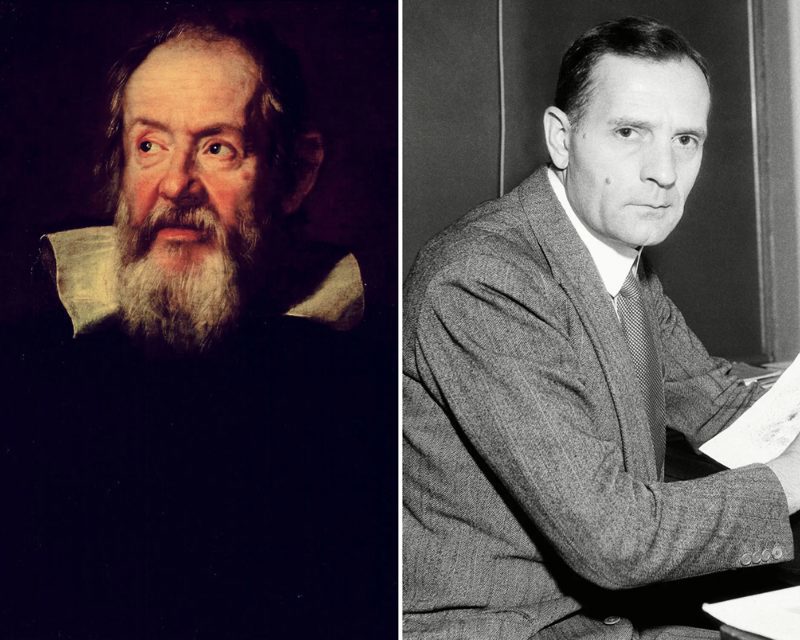
It was back in the days of Galileo Galilei that humanity first got a clear idea of the true nature of the Milky Way. From the Earth's perspective, the galaxy seems like a nebulous band across the sky. In reality, though, it's a huge conglomeration of stars whose light blends together, as pointed out by Galileo. By the middle of the 1700s, we started to understand why the galaxy appeared the way it does - because we're in it. Immanuel Kant acknowledged this when he predicted that the Milky Way is a rotating disk of stars. A few centuries later, Edwin Hubble discovered the Andromeda galaxy, and our understanding of this helped us visualize what our own galaxy looks like. With galaxies sharing similar features like a dense central bulge and spiral arms, it seems safe to assume that the Milky Way is the same.
It's difficult to perfectly map out the galaxy for various reasons
Without leaving the galaxy and looking at it from afar, it's impossible to know for sure what the Milky Way looks like. However, these other galaxies allow us to get a vague idea of what we live in. Unfortunately, it's hard to map out the galaxy that effectively, given there are potentially up to 400 billion stars contained inside it. Moreover, it spans around 100,000 light years, with black holes, star-forming regions, and other entities also helping to form the Milky Way. Something else that makes things difficult is dust, with the presence of this obscuring our view of the further reaches of the galaxy. As it stands, our telescopes aren't powerful enough to see what's on the other side because dust gets in the way. Fortunately, the people who work tirelessly to map out the galaxy and give us an idea of what it looks like have workarounds.
The Gaia spacecraft is gradually showing us more of our galaxy
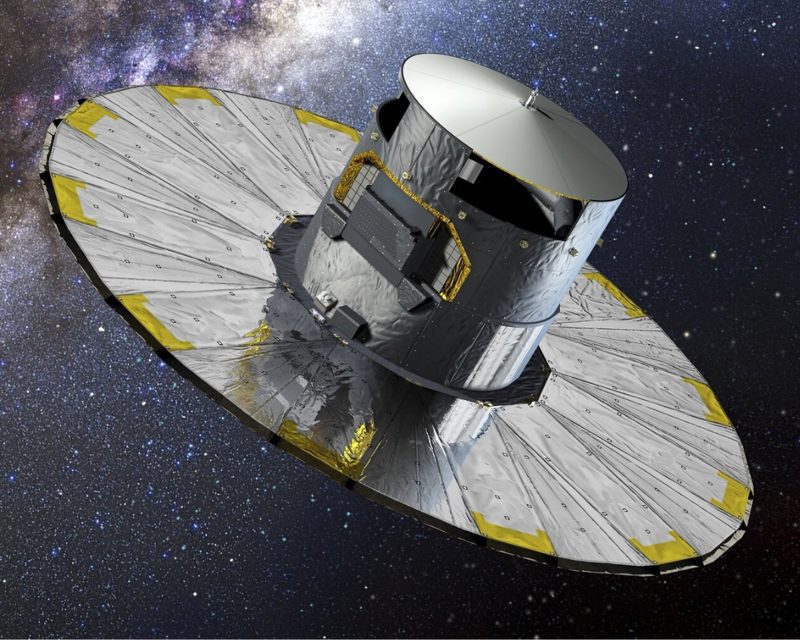
Using the observations available to them, comparisons with different galaxies, and theoretical modeling, researchers are still able to give an idea of what the Milky Way looks like. For instance, by examining the movement of stars and utilizing our understanding of gravity, scientists can better envision the galaxy's core. This has led to assumptions that it has a "barred" spiral shape, where the core is elongated. As time progresses, this understanding is likely to develop further, thanks to the assistance of things like the Gaia spacecraft. It launched over a decade ago now with the intention of identifying as many stars as possible. It's already cataloged around 2 billion of them, which seems great until you realize how many more are meant to be out there. Still, the spacecraft's findings allow for a better idea of what the galaxy around Earth looks like.
It's unlikely that things will develop enough in our lifetime for us to see how the Milky Way legitimately appears from the outside, so how can they tell what the Milky Way looks like? Thankfully, great progress is being made toward mapping out the galaxy and giving us a better idea of the space around us. With the rate at which things are going, who knows what strides we could make in the next few decades?
You May Also Like
 Education
The Difference Between Correlation and Causation
 Science
Why Some Studies Cannot Be Replicated
 Science
How to Tell a Breakthrough From a Press Release