Ancient Trade Routes That Helped To Shape Our History

Trade routes are something that’s so commonplace in the world that it can be easy to forget just how long they have been around. Did you know that trade routes have actually been around for thousands of years? That’s right; ever since BCE, people have learned that trading things with other nations can be a real commodity.
In fact, without many of the ancient trade routes of the past, we wouldn’t have many of the things we still enjoy in the modern world. That’s why the ancient trade routes that helped to shape our history are so important to remember.
The Silk Road is one of the most famous ancient trade routes
When it comes to the most famous ancient trade route, that title so often goes to The Silk Road. Even today, silk is still a hot commodity, but when the Roman Empire began trading silk with China, it really changed the game. It’s believed The Silk Road was formed in the 1st century BCE with gold, silver, and wool coming from Europe and silk coming from China. However, it wasn’t just the goods that were traded that really opened things up, as the trade route allowed the world to learn about other arts, religions, technology, and knowledge of the world. Several trading spots were created along the 4,000 miles of The Silk Road, but things took a turn when the Roman Empire fell in the 4th century, and the trade route became unsafe. That was until Italian explorer Marco Polo revived The Silk Road in the 13th century, with some scientists now thinking the merchants who traveled the route might have helped the devastating spread of the plague.
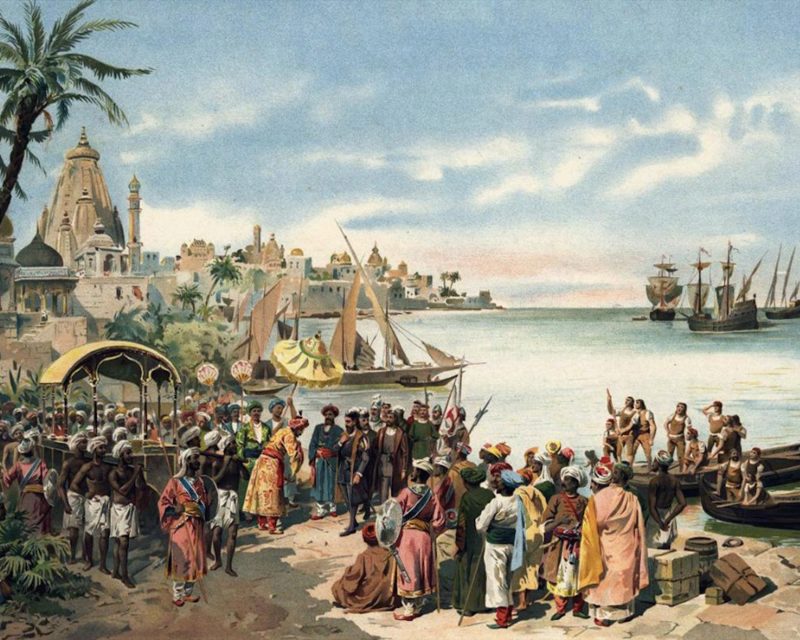
The Spice Routes could have led to the development and change of many things
While most ancient trade routes traveled across land, The Spice Routes were different as they saw the West and the East use water to move their goods across the world. Spices like cloves, pepper, nutmeg, and cinnamon were in huge demand across Europe, but Arab and North African middlemen controlling the trade access with the East meant they were extremely rare and costly. That’s why, between the 15th and 17 centuries, Europeans took advantage of new navigation technology that meant they could suddenly travel long distances from Europe by water. This opened up trading with Japan, China, and Indonesia, with some theorizing it was The Spice Routes that pushed for faster boats and colonization. After all, Christopher Columbus was thinking about spices when he set off in 1942. Eventually, wars broke out and lands were colonized as people continued to make their fortune in the spice trade.
The Amber Road saw one of the most sought-after gemstones traded across the world
Would you believe that people were trading amber as far back as 3000 BCE? The Romans particularly valued this gemstone, meaning it wasn’t long before The Amber Road was formed. Now, Europe and the Baltic states could more easily trade amber after large deposits of the gemstone were discovered under the Baltic Sea. Once storms washed it ashore, the amber could be harvested and traded across the world. Sadly, things took a turn in the 12th and 13th centuries when the Teutonic Knights took control of the amber-producing areas. Once here, they would harshly persecute their Prussian competition and end the lives of anyone attempting to harvest or sell the gemstone. Amazingly, part of The Amber Road can still be found in modern-day Poland, now known as The Amber Highway.
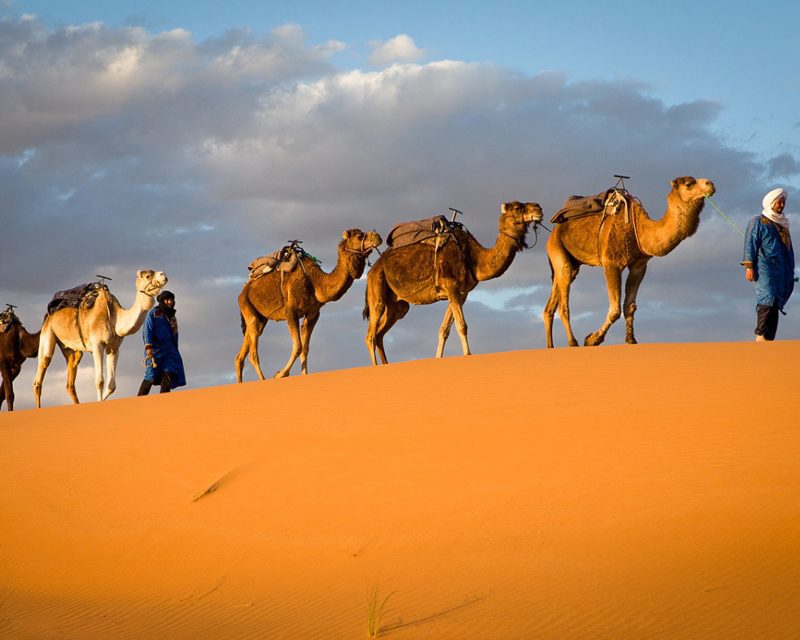
The Trans-Saharan Trade Route helped to spread Islam across much of Africa
The Trans-Saharan Trade Route was more than just one route, but its significance from West to North Africa can’t be ignored. The various routes first appeared in the 4th century CE, with things really taking a turn by the 11th century. Here, over 1,000 camel caravans were used to carry everything from cloth to salt to gold to enslaved people across the Sahara. Along the way, these goods would be traded for things like European weapons and ostrich feathers. Amazingly, it’s how The Trans-Saharan Trade Route helped to spread Islam from North to West Africa that makes this such an important ancient trade route. It also encourages people to start building state buildings and develop monetary systems. When Europeans learned how profitable African goods could be in the 16th century, they essentially overran The Trans-Saharan Trade Route with their transatlantic trade, and the wealth moved away from inland trade routes to coastal areas, leaving the trade route obsolete.
The ancient trade routes that helped to shape our history did more than just move goods around the world. In fact, without many of the ancient trade routes, we might not have so many things in society that so many of us still use today.
You May Also Like
 Education
The Difference Between Correlation and Causation
 Science
Why Some Studies Cannot Be Replicated
 Science
How to Tell a Breakthrough From a Press Release