Mammoth Droppings Are Changing What We Know About Their History

Supposedly, over 99% of the species that have ever lived on this planet are now extinct. That might seem like a statistic that’s hard to believe, even in a world where we now regularly hear about animals being endangered. However, it’s worth noting that this figure encompasses the history of the Earth, with many of those animals passing away from instances outside of human intervention.
For example, asteroid impact and the effects this caused are believed to be responsible for wiping out the world’s dinosaurs. Some years later, woolly mammoths came along and eventually disappeared themselves, potentially because of the Earth’s warming climate. Is it possible there’s more to their story than we first thought, though? It seems so, as mammoth droppings are changing what we know about their history.
eDNA suggests woolly mammoths were still alive 4,000 years ago
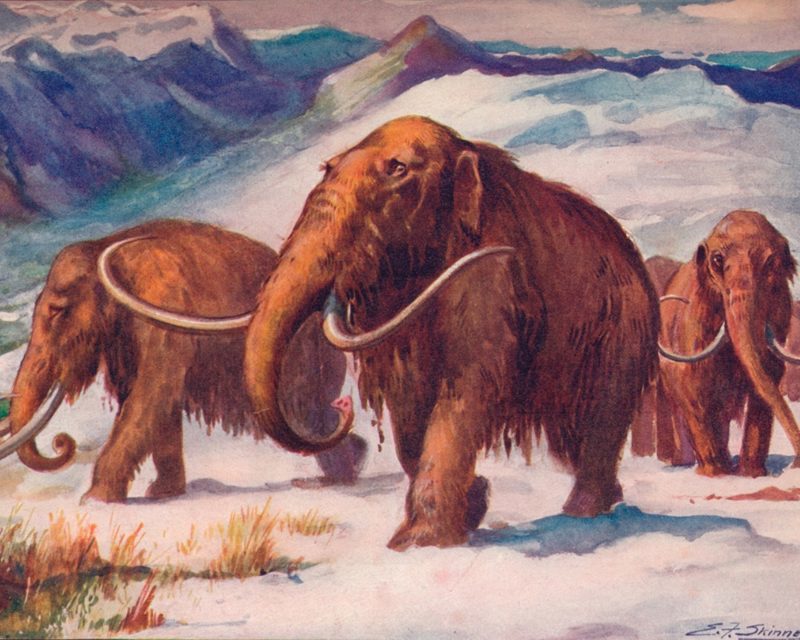
It’s hard for us to fully understand everything about these animals that lived so long ago. After all, we weren’t around back then to document everything. However, scientists have still managed to make some incredible discoveries with the evidence at their disposal, which includes eDNA - DNA left in the environment. This has become quite popular among ecologists recently, with some using it to offer a surprising revelation about woolly mammoths. According to them, these creatures may have been around in Eurasia and North America for longer than we initially assumed. While the belief is that they went extinct 10,000 years ago, the new evidence suggests that mammoths were still alive 4,000 years ago. Scientists made this assertion based on droppings left in the soil containing their DNA.
Some scientists argue that the findings aren’t necessarily accurate
To the average person, this discovery is hardly life-changing. However, it’s still important, as it influences our understanding of history. Perhaps that’s why several scientists are reluctant to accept it? The findings, which were published in the journal Nature, have received some backlash, with Joshua Miller and Carl Simpson particularly vocal about their views on it. They believe that there’s no certainty the droppings were actually made 4,000 years ago, given where they were found. As the DNA was identified in an area of freezing temperatures, it’s possible that it wasn’t released into the environment until many years later. After all, it’s something that can apparently happen with animal bones in such low temperatures, so why wouldn’t droppings be the same? It’s stuff like this that explains why eDNA hasn’t been embraced by everyone.
Skepticism with eDNA is inevitable because there’s nothing physical to back up the evidence
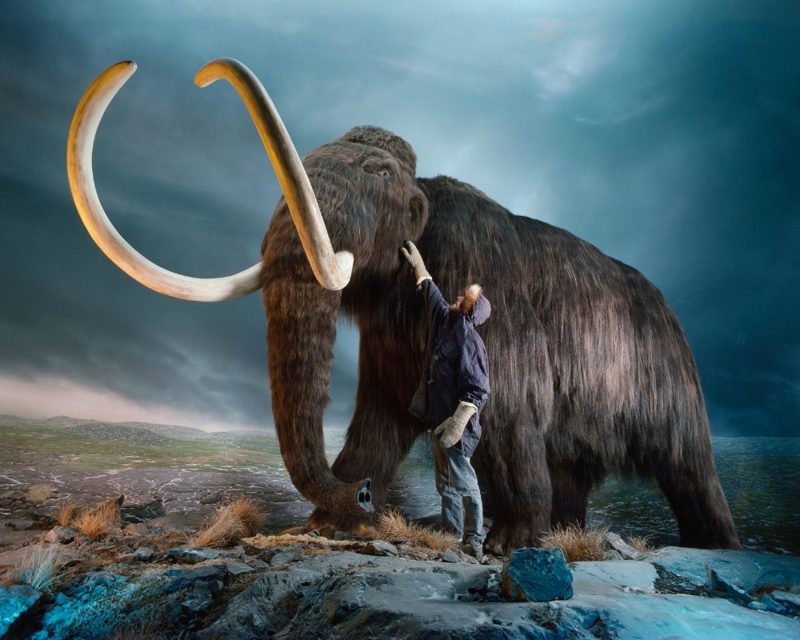
This wasn’t the only evidence the scientists used to deny the notion that woolly mammoths were still around 4,000 years ago. They also argued that the carcasses of such animals should still be in these locations if they passed away that recently. Again, because of the temperature, there should have been some remains to speak of, yet none were found. Yucheng Wang, who wrote the paper published in Nature, suggests that most mammoths probably did go extinct 10,000 years ago but some remained until much later in the Earth’s history. He also says that he’s not surprised findings like these are viewed with skepticism, given there’s no physical evidence to back it up. As eDNA just uses DNA left in the environment, there’s nothing to show for it other than data.
While the truth is still uncertain about what really happened to mammoths, this paper has opened up discussion between different fields that may help us all to eventually reach a concrete answer. Both sides seem to embrace the debate and feel such conversations are important in a time when extinction appears to be commonplace. Here’s hoping they’re able to reach a consensus soon.
You May Also Like
 Education
The Difference Between Correlation and Causation
 Science
Why Some Studies Cannot Be Replicated
 Science
How to Tell a Breakthrough From a Press Release