The Best Places To Watch The April 8 Total Solar Eclipse

Eclipses may seem like something that happens once in a blue moon. However, they can be surprisingly common. Around two to five solar eclipses reportedly occur every year; it’s just that whether or not you can experience them depends on where you are. That’s why not everyone will get to enjoy the one that’s set to occur on April 8.
This will be a total solar eclipse, meaning it will be dark during the day for people within the 115-mile-wide path of totality. On this occurrence, it stretches diagonally northeast across the United States, covering 15 different states. So, you may have a chance to experience it without having to go anywhere. To be sure, it’s worth taking a deeper look at the best places to watch the April 8 total solar eclipse.
15 states will sit in the path of totality on April 8
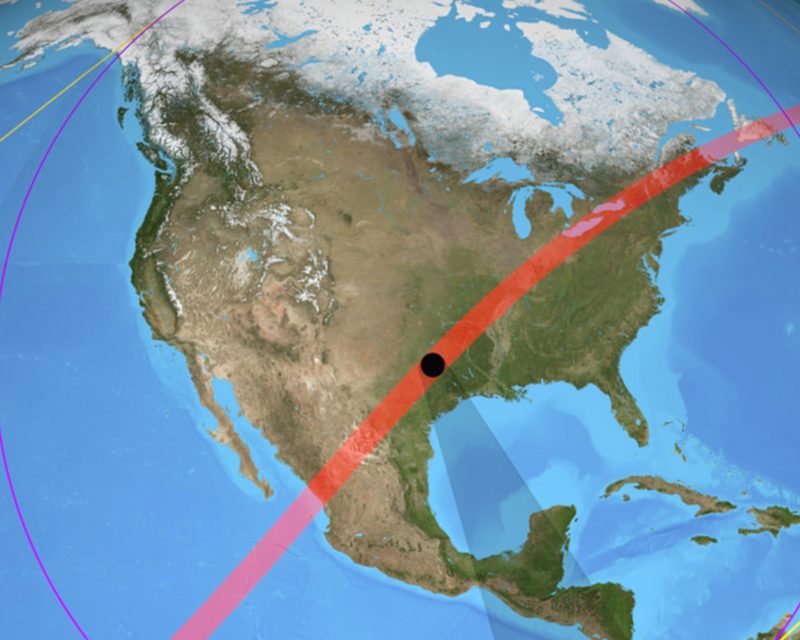
The US states covered by the path of totality for the April 8 total solar eclipse are Arkansas, Indiana, Illinois, Kentucky, Maine, Michigan, Missouri, New Hampshire, New York, Ohio, Oklahoma, Pennsylvania, Tennessee, Texas, and Vermont. Parts of Mexico - including Sinaloa, Chihuahua, and Durango - and areas of Canada - such as Ontario, Newfoundland, and Nova Scotia - also fall in the path of totality. Of course, just because the eclipse can be experienced in each of these states, that doesn’t mean you’re guaranteed to see this solar event just because you live there. For instance, only the southeastern part of Missouri and Oklahoma actually sit in the path.
Some cities will have an eclipse for longer than others
If you want to head to a big city to see the eclipse on April 8, some of the places you can visit include Austin, Dallas, Indianapolis, and San Antonio. The more central these destinations are in the path of totality, the longer the event is likely to last. So, in Austin, it’s expected to last around 1 minute and 46 seconds at 1:36 pm, while in Indianapolis, it’s probably going to be 3 minutes and 46 seconds at 3:06 pm. Apparently, the best spot to hit up to enjoy the eclipse for as long as possible is Nazas in Mexico, where it will occur for just shy of 4 minutes and 30 seconds.
The weather in these areas will also impact where is best to go
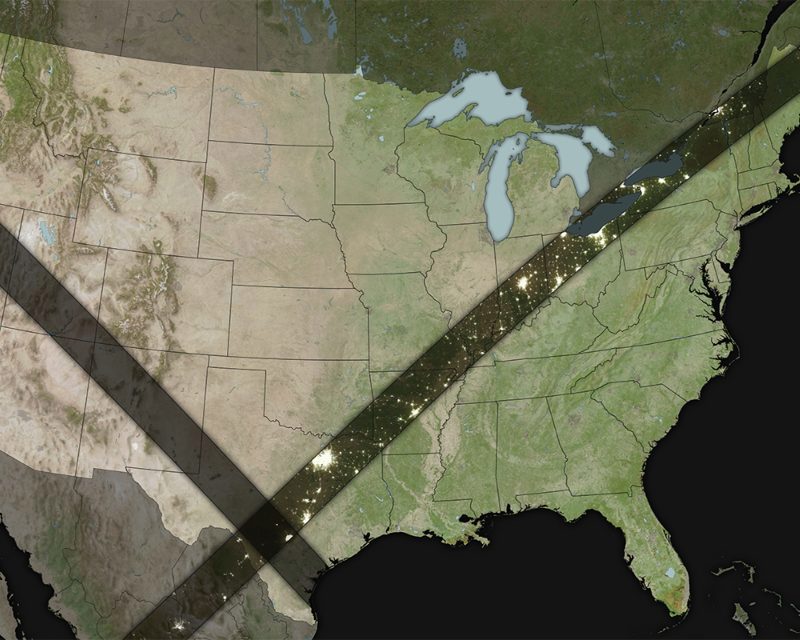
The temptation might be to try and find a spot along the central line in the path of totality, as this is where the eclipse will generally last the longest. However, something you need to think about is the weather. There’s no point heading somewhere that’s forecast to be cloudy on April 8, as you won’t get to experience the eclipse to the fullest. So, it’s worth keeping an eye on weather predictions in the days leading up to the eclipse. It was the same situation last October when parts of the US got to experience a ring of fire if they were in the path of annularity. Interestingly, a section of Texas sits at the crosspoint between the two paths. That means some people in areas like San Antonio may get to experience this next solar event with minimal effort, just like last year.
Hopefully, April 8 will be a sunny day throughout the United States, allowing people all across the path of totality to enjoy this eclipse to its fullest. We apparently won’t be getting another total solar eclipse in the US until 2033. So, if you’re eager to see it, we’d definitely recommend taking the day off and heading to one of the spots we mentioned. Otherwise, you’ll have a long time to wait until the next one.
You May Also Like
 Education
The Difference Between Correlation and Causation
 Science
Why Some Studies Cannot Be Replicated
 Science
How to Tell a Breakthrough From a Press Release