It Turns Out The Earth's Core Might Wobble Every 8.5 Years

The interior of the Earth is incredibly fascinating. Much of what sits beneath the planet's surface isn't solid, with most of the space occupied by the magma of the mantle. Aside from the thin layer of crust right beneath our feet, the only other area down below that's solid is the inner core.
What we know about this part of the Earth is still somewhat limited, as we can't exactly go down there to investigate its properties. Nevertheless, scientists are continuing to make some amazing breakthroughs regarding the planet's interior, including one recent discovery from China. It turns out the Earth’s core might wobble every 8.5 years, but what does that mean?
A deviation in polar motion indicated the presence of an inner core wobble
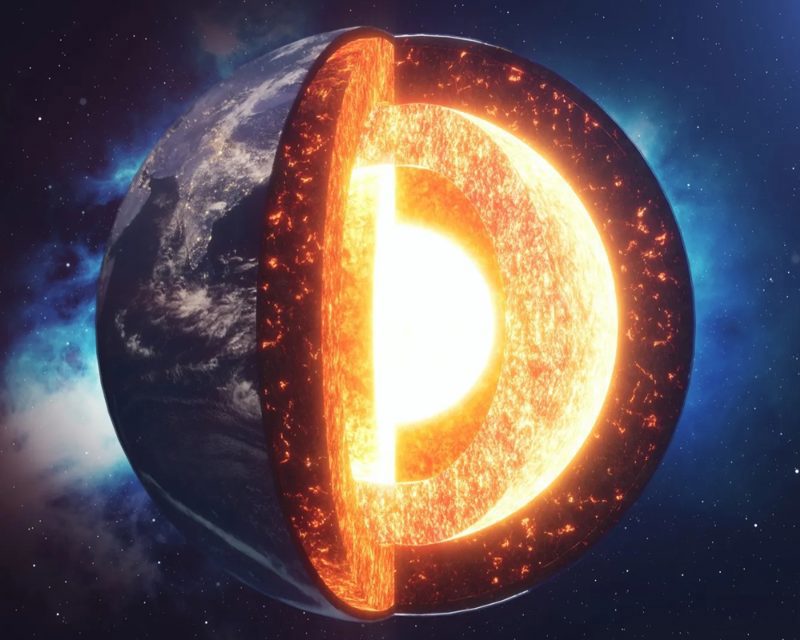
There's a lot that the Earth's core is responsible for that we might not have realized. Things like how long each day is and the magnetic field of the planet are influenced by the core, which scientists now believe is slightly misaligned with the mantle. That misalignment is what causes the inner core to wobble like a spinning top every 8.5 years. The discovery was made by Hao Ding of Wuhan University and their team after they noticed a deviation in polar rotation repeatedly occurring this far apart. Polar rotation relates to the Earth's movement on its rotational axis relative to the crust.
New research identified a 0.17-degree title between the mantle and the inner core
This revelation came back in 2019, with a more recent study conducted to confirm the presence of an inner core wobble. Hao Ding's team looked into day-length shifts across the globe and compared them to what they'd discovered regarding variations in polar motion. What they found indicated that a 0.17-degree tilt between the mantle and the inner core is likely the reason behind the wobble. In identifying this, they seemingly disprove the previous notion that the rotation axis of both the mantle and the inner core coincide. According to the research, it also suggests that the inner and outer cores and the northern and southern hemispheres of these may possess different densities.
The inner core's wobble could ultimately impact the Earth's magnetic field
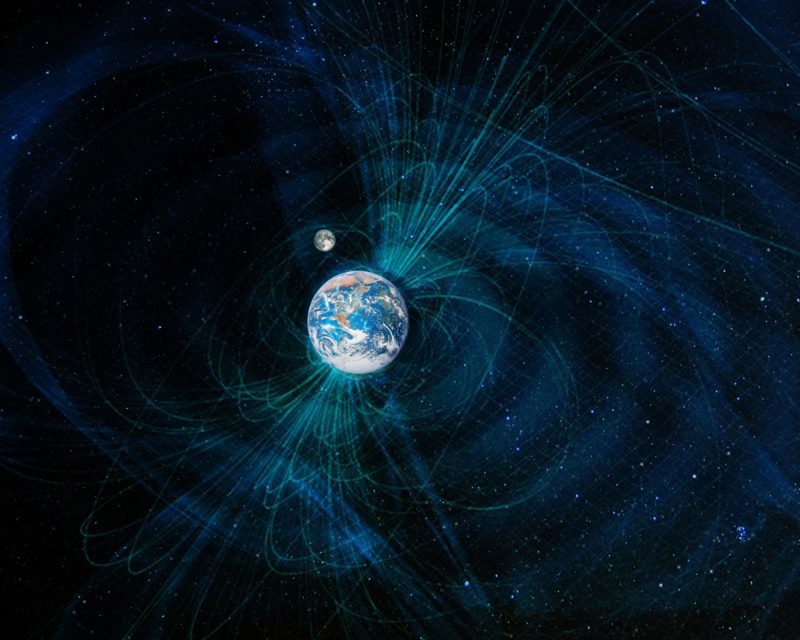
Although atmospheric, oceanic, or hydrological influences could have been responsible for the observed deviation in polar motion, Hao Ding's team has seemingly ruled out such influences. Nevertheless, it's hard to ignore their potential impact completely, given how much more analysis would be required to do this. Still, the findings from Hao Ding's team offer another step forward in understanding more about our planet. It also indicates that there may eventually be a shift in the Earth's magnetic field, with the inner core's wobble possibly affecting its shape and motion over time. Given how infrequently the wobble reportedly occurs, though, such an outcome isn't something we're likely to see for a long time.
This new discovery might not seem that monumental, especially because the inner core wobbling every 8.5 years isn't something that we're ever aware of up here. However, learning more about our planet is never a bad thing, and this information could prove to be incredibly useful one day.
You May Also Like
 Education
The Difference Between Correlation and Causation
 Science
Why Some Studies Cannot Be Replicated
 Science
How to Tell a Breakthrough From a Press Release