Famous Charlatans Who Have Been Lost To The History Books

Scam artists are nothing new. They were doing their thing long before people like Anna Delvey were making a living with other people’s money. You only need to take a look at history books to see that charlatans have been around for centuries, although their methods were maybe a little different back then.
Of course, with there being so many of these scam artists over the years, some are definitely more remembered than others. We tend to forget about ones that weren’t active in recent years, bar the odd person like Charles Ponzi, who’s the reason that Ponzi schemes are named the way they are. Still, it’s worth remembering the famous charlatans who have been lost to the history books.
John Brinkley convinced men that certain goat parts could fix their impotence
No one can ever claim that John Brinkley did not possess great skill. After all, he was able to convince men to get surgery to attach certain private parts of goats to their own nether regions. Brinkley claimed that doing this would help to resolve impotence, and enough men believed him to make the procedure somewhat popular in the 1920s and ‘30s. Of course, there was no medical science behind his claim, something that the American Medical Association spent several years trying to prove. Although John sued them for libel when they tried to expose his fraudulence, they were proven right in the end.
Elisha Perkins had a miracle cure that fooled even the US president
Elisha Perkins is a name that probably shouldn’t be forgotten, given that his miracle cure was popular enough to attract the attention of the nation’s first president. According to him, rubbing two pieces of metal over an afflicted area could help to treat issues like rheumatism and gout. However, there was no real medical value to this, although some patients did claim to feel “cured” by his patented Perkins Metallic Tractors. Interestingly, this stands as one of the earliest recorded examples of the placebo effect, as some people also felt equally “cured” by using objects that weren’t metallic.
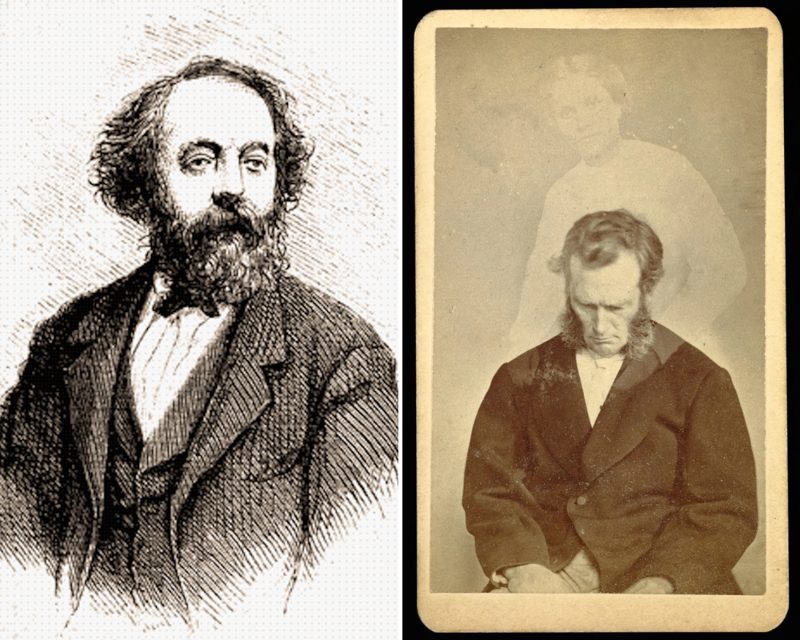
William Mumler claimed he could take photographs that included people’s lost loved ones
A quick search online will reveal supposedly authentic photographs showcasing supernatural phenomena. It turns out that this sort of thing has been around since the early days of photography, with William Mumler being someone who used it to scam people in the 1800s. He claimed that he could take pictures of people, and there was a possibility their ghostly loved ones would appear in the photo with them. His scam fooled a lot of people, although it did land him in court with fraud charges. Luckily for him, the court couldn’t find an explanation for how he’d pulled off his trick, so Mumler was acquitted.
Mary Baker tried and failed to convince people that she was foreign royalty
It’s not easy to get away with having a fake identity, which is why people like Anna Delvey usually get caught in the end. Even in the 1800s, when there were less obvious ways to catch people out, charlatans still had difficulty convincing people of their false identities. Mary Baker was one such person. She claimed to be the lost Princess Caraboo of Javasu, something that the people of Almondsbury took to be the truth. She proceeded to attract a wealth of attention thanks to her skills in dancing, archery, and more. Unfortunately, the owner of a nearby lodging house soon rumbled Baker as a former guest, and she was revealed to be a cobbler’s daughter. Still, her acting prowess ensured she had a career afterward.
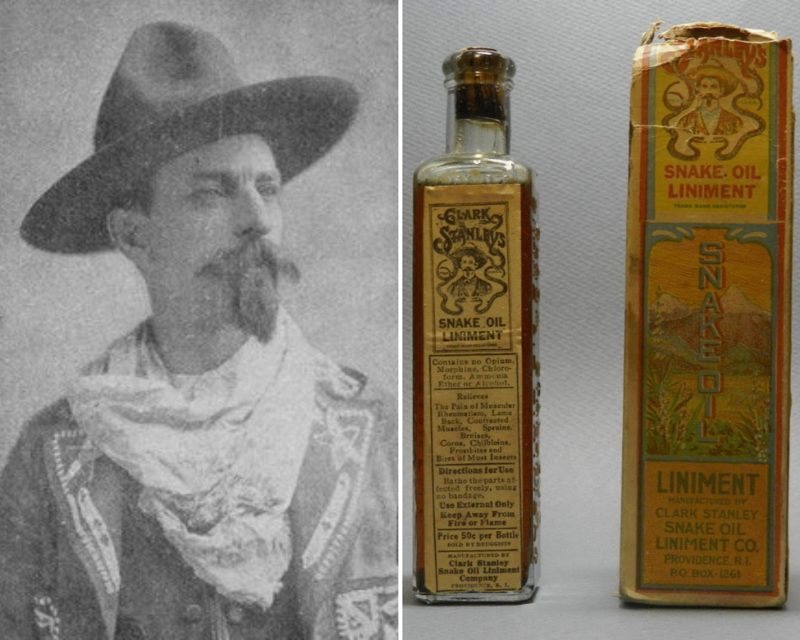
Clark Stanley was the nation’s first “snake oil salesman”
You’ve probably heard of the term “snake oil salesman,” and you have Clark Stanley to thank for that. He’s considered the first person of his kind in American history, with the man selling a cure-all medicine in the 19th century that proved to be useless. According to an analysis by federal investigators, his concoction featured mineral and fatty oils, turpentine, and red pepper. It earned him a $20 fine, which might not seem like much now but is the equivalent of hundreds of dollars in today’s money. Interestingly, though Stanley lied about his product containing snake oil, such concoctions do exist and have long been used in China to help with certain conditions.
Charlatans are hardly historical figures that we should look back on with any sort of fondness. Still, they’re a part of our history that is worth remembering. Plus, if nothing else, it’s quite fascinating to see the things they were able to get away with all those years ago.
You May Also Like
 Education
The Difference Between Correlation and Causation
 Science
Why Some Studies Cannot Be Replicated
 Science
How to Tell a Breakthrough From a Press Release