Everything There Is To Know About Dark Matter

Things have come a long way since the first moment humans looked up at the stars and wondered what else could be out there in the world. Although we know so much more about the universe than ever before, there are still some questions that have left us scratching our heads. One of those moments came in the 1930s.
Fritz Zwicky spotted two galaxies that were orbiting faster than they should have been due to their visible mass. It was only then he proposed the idea of an unseen substance, which was later named dark matter, and it’s something that’s been spotted throughout the universe ever since. Even taking a look at everything there is to know about dark matter might leave a host of unanswered questions all these years later.
What is dark matter?
Simply put, no one has any idea what dark matter could be. To start with, some researchers believed that the missing mass from across the universe was made up of black holes and faint stars. While it was accepted for a long time, further tests have proven that can’t be the case. Instead, the current idea is the gaps are filled with dark matter, but what is it? That’s where things get tricky. Right now, people think the most likely answer is dark matter is made from WIMP - a Weakly Interacting Massive Particle - which is kind of like a neutron by between 10 and 100 times heavier than protons.
How can we find dark matter?
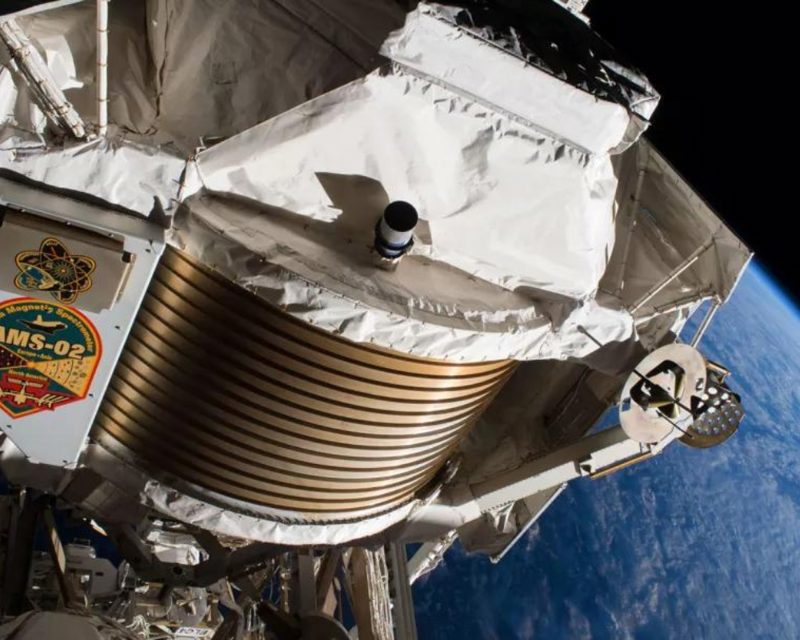
We don’t know what it is, so how can we detect dark matter? If it really is made from WIMPS, then it should be all around us and detectable. However, years of tests have never shown any credible results. Instead, it appears to have raised more questions. Researchers have taken their experiments underground, where particles aren’t affected by radiation, to try and protect the results. Even though they have been working for decades, they have never found a way to detect dark matter. It’s now believed that dark matter might be made of particles that are even smaller than WIMPs or made from something that makes them impossible to track right now.
What properties does dark matter have?
The one thing that researchers have noticed is that dark matter appears to have an effect on something’s gravitational pull, but that’s where things fizzle out. Some theories suggest that dark matter particles could be their own antiparticles, meaning they would destroy each other if they ever met. This is backed up by suggestions that annihilations have taken place throughout the years. Still, no one is entirely sure if they are coming from dark matter or not.
Is dark matter found in every galaxy?
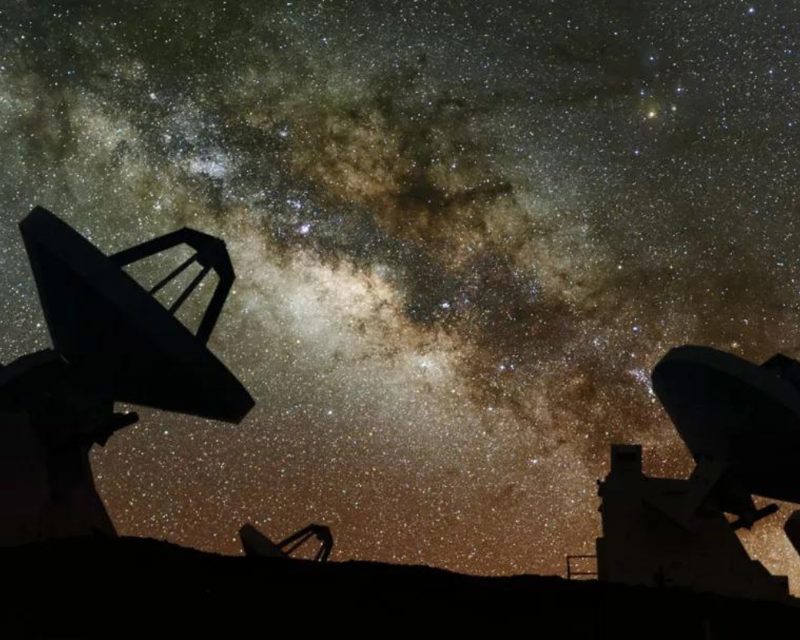
Of course, we aren’t the only galaxy in our universe, and we’re yet to discover every single one that lies out there across space. Still, there is evidence that dark matter could actually be the controlling force that helps galactic clusters and galaxies form in the first place. Earlier in 2022, researchers announced they had discovered dark matter in galaxy NGC 1052-DF2. The problem? There’s still no way to trace it or measure how much there could be.
Does dark matter really exist?
One thing that plenty of people have found themselves wondering throughout the years is if dark matter really exists at all. After all, all signs are pointing toward something we can’t track, locate, or experiment on, even after all these years of work. A signal that was fired at the start of the universe suggests that dark matter might have some kind of electrical charge. Then again, this hasn’t been confirmed. While there is evidence that the unknown substance lies out there in the universe, the world will never truly know everything there is to know about dark matter until they have a way to study the unusual stuff.
Learning everything there is to know about dark matter might be more challenging than it seems on the surface. After all, no one has ever been able to perform studies on the stuff or even prove it exists, meaning scientists still have a long way to go before learning the truth.
You May Also Like
 Education
The Difference Between Correlation and Causation
 Science
Why Some Studies Cannot Be Replicated
 Science
How to Tell a Breakthrough From a Press Release