Animal Migration Mysteries Researchers Are Unraveling
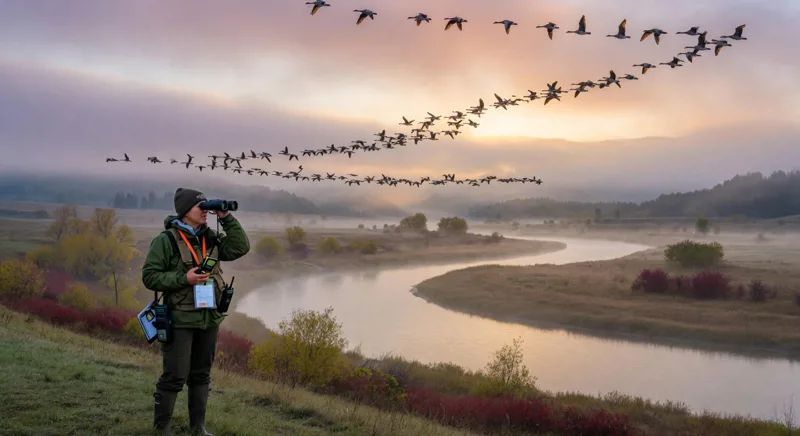
Animal migration mysteries researchers are unraveling reveal a remarkable natural world of invisible maps, magnetic senses, ocean highways, and seasonal timing. From monarch butterflies to sea turtles and songbirds, new tracking technology is showing where animals travel—and raising fascinating questions about how they know the way.
Why Animal Migration Still Holds So Many Secrets
Animal migration is more than a seasonal journey. It is a carefully timed strategy for finding food, avoiding harsh weather, raising young, and surviving across changing landscapes. Some animals follow the same route for generations, while others adjust their movements when conditions shift.
For decades, researchers could observe animals only at particular locations. A bird might be seen leaving a breeding ground, but its winter destination remained unknown. A sea turtle could disappear beyond the horizon for months. Today, GPS tags, satellite transmitters, weather radar, acoustic sensors, and environmental DNA are helping scientists follow these journeys in far greater detail.[1][4]
Even with better maps, major mysteries remain: How do animals calculate direction? How do young individuals learn migration routes? Why do some populations change course while others remain loyal to traditional pathways?
How Do Migrating Animals Find Their Way?
The Earth’s magnetic field
Many migrating species appear to use Earth’s magnetic field as a navigation aid. Birds, sea turtles, salmon, and some insects may detect magnetic information that helps them determine direction or recognize a geographic “signature.” Scientists are still investigating the exact biological mechanisms behind this ability.
Sunlight, stars, and polarized light
Birds can use the sun as a compass, adjusting for its movement across the sky. Nocturnal migrants may also rely on stars, while polarized light can provide directional information when the sun is partly hidden by clouds. These cues work alongside internal biological clocks that help animals maintain seasonal schedules.[5][6]
Smell, sound, and landmarks
Navigation is rarely based on a single sense. Salmon may use chemical signatures in water, elephants can respond to distant low-frequency sounds, and birds may recognize coastlines, rivers, mountain ranges, or other visual landmarks. Ocean currents and tidal patterns can also influence marine migration routes.
Four Migration Mysteries Scientists Are Investigating
- How do young animals learn the route? Some species inherit directional tendencies, while others appear to learn routes from older group members or from repeated experience. Separating genetic programming from social learning remains a central research question.
- Why do animals choose difficult paths? Migration routes may cross deserts, busy cities, open oceans, or melting Arctic landscapes. These pathways can still offer the best combination of food, shelter, favorable winds, and breeding opportunities.
- How do animals know when to leave? Day length, temperature, rainfall, food availability, hormones, and weather conditions can all trigger movement. The challenge is understanding how animals combine these signals when they conflict.
- What happens when traditional cues change? Climate change can shift flowering, insect emergence, snowmelt, and ocean productivity. If animals migrate at their usual time but food peaks earlier or later, the result can be a dangerous ecological mismatch.[2][7]
New Animal Tracking Technology Is Filling the Gaps
Modern animal tracking technology has transformed migration research. Lightweight GPS and GSM devices can transmit an animal’s position without requiring researchers to recover the tag. Some sensors also record temperature, activity, acceleration, and feeding behavior.[3]
For birds, weather radar can reveal large-scale movements across entire regions, including nighttime flights that are difficult to observe directly. Automated sound recorders and artificial intelligence can identify calls made by passing species. Satellite tags have also exposed long-distance routes used by turtles, whales, seabirds, and other ocean travelers.[1]
Researchers increasingly combine several methods instead of relying on one device. A satellite map may show where an animal went, while accelerometer data suggests whether it was flying, resting, diving, or feeding. This combination creates a more complete picture of animal behavior.
| Technology | What it reveals |
|---|---|
| GPS and satellite tags | Precise routes, stopovers, speed, and migration timing |
| Weather radar | Large-scale bird movement and migration intensity |
| Acoustic monitoring | Species presence, calls, and nocturnal movement |
| Environmental DNA | Evidence that animals have passed through water or habitat |
What Migration Research Means for Conservation
Tracking reveals that protecting a species requires more than safeguarding its breeding grounds. Animals may depend on a chain of stopover habitats, coastal waters, river corridors, or wintering areas spread across several countries. Losing one link can weaken the entire migration system.
This research also helps conservationists identify collision risks, illegal hunting zones, fishing hazards, blocked river routes, and important feeding areas. For migratory birds, even artificial light and habitat loss in cities can create problems during long-distance flights.
The Biggest Unanswered Question
Perhaps the most intriguing mystery is how migration remains so reliable despite unpredictable conditions. Wind changes, storms, droughts, fires, and human development can all disrupt a journey. Yet many animals still reach distant destinations with extraordinary accuracy.
Researchers are now studying migration as a flexible, decision-making process rather than a fixed routine. The goal is to understand which species can adapt, which populations are most vulnerable, and how conservation plans can protect routes before they disappear.
Conclusion
Animal migration mysteries researchers are unraveling are becoming clearer through satellite tracking, radar, genetics, bioacoustics, and field observation. Still, every new map raises deeper questions about memory, instinct, environmental change, and survival. The more scientists learn about migration routes, the better equipped people are to protect the invisible networks that connect ecosystems around the planet.
References
You May Also Like
 Education
The Difference Between Correlation and Causation
 Science
Why Some Studies Cannot Be Replicated
 Science
How to Tell a Breakthrough From a Press Release