How Clinical Trials Move From Lab to Patients
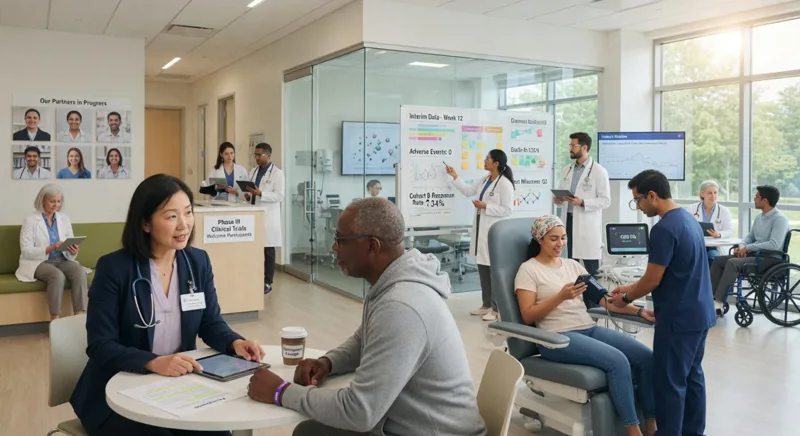
How clinical trials move from lab to patients is a carefully controlled journey designed to answer one essential question: does a promising discovery work safely in real people? From laboratory research and animal studies to regulatory review and long-term monitoring, every stage adds evidence before a treatment reaches everyday care.
Where New Treatments Begin
The process usually starts in a laboratory, where researchers study a disease and identify a potential medicine, vaccine, medical device, or biological therapy. Scientists may examine how a compound affects cells, genes, proteins, or disease pathways.
At this stage, researchers ask questions such as:
- Does the treatment target the disease effectively?
- How does it work in the body?
- What dose might be appropriate?
- Could it cause harmful effects?
Promising candidates then undergo preclinical testing. This may involve laboratory models and animal studies to gather early information about toxicity, dosage, metabolism, and possible benefits. These results do not prove that a treatment will work in humans, but they help determine whether human testing is reasonable.
Regulatory Preparation Before Human Testing
Before a drug clinical trial can begin, the sponsor generally submits detailed evidence to the relevant regulatory authority. In the United States, this includes an Investigational New Drug application for many medicines. The submission describes the treatment, manufacturing standards, preclinical findings, and proposed clinical trial design.
An independent institutional review board, or IRB, also evaluates the study. Its role is to protect participants by reviewing the risks, potential benefits, recruitment process, privacy safeguards, and informed consent materials. Human studies can begin only after the appropriate regulatory and ethical reviews are completed.[1][3]
How Clinical Trial Phases Work
Clinical trials move through stages, with each phase answering different questions. The exact design varies by treatment type, disease, and research objective, but most drug development programs follow this general pathway.
Phase 1: Is the treatment safe?
Phase 1 is usually the first study in humans. It typically involves a small group, often about 20 to 80 participants. Researchers focus on safety, side effects, dosage, and how the body absorbs and processes the treatment.[1]
Some Phase 1 studies involve healthy volunteers, while others recruit people with the condition being studied. Participants receive close medical monitoring, often through frequent examinations, laboratory tests, and follow-up visits.
Phase 2: Does it show potential?
Phase 2 trials generally include more participants, often about 100 to 300 people with the relevant disease or condition. Researchers look for preliminary evidence that the treatment works while continuing to assess short-term safety and identify an appropriate dose.[1]
Many candidates do not progress beyond this stage. A treatment may fail to produce meaningful results, cause unacceptable side effects, or prove difficult to administer consistently.
Phase 3: Does it work compared with current care?
Phase 3 studies are larger and may include hundreds or thousands of participants. They provide more information about effectiveness, side effects, different populations, dosage levels, and comparisons with a placebo or standard treatment.[1][3]
These trials often use randomization, which assigns participants to different treatment groups by chance. Many are also blinded, meaning participants, researchers, or both may not know who receives the experimental treatment. These methods reduce bias and make the results more reliable.
What Happens After a Successful Trial?
Once clinical trial results are available, the sponsor submits an application for regulatory approval. Reviewers examine the evidence on safety, effectiveness, manufacturing quality, labeling, and the proposed use of the treatment.
Approval is not automatic. Regulators may request additional analyses, more studies, manufacturing changes, or clearer safety information. If the evidence supports a specific use, approval may be granted for that condition and patient population—not necessarily for every possible use.
Manufacturers must also demonstrate that they can produce the treatment consistently and meet required quality standards. This step helps ensure that the product used by patients is comparable to the product evaluated in clinical research.
How Patients Gain Access
After approval, healthcare professionals can prescribe or provide the treatment according to its authorized labeling. Pharmacies, hospitals, insurers, and health systems then become part of the access pathway.
Coverage and out-of-pocket costs can vary depending on the treatment, insurance plan, medical indication, and location. Some newly approved therapies may require prior authorization or specialist supervision. Patients should discuss eligibility, expected monitoring, financial assistance options, and alternatives with a qualified healthcare professional.
People may also access investigational treatments through an active clinical trial. Trial registries can help patients and clinicians identify studies by condition, location, intervention, eligibility criteria, and recruitment status.
What If a Patient Cannot Join a Trial?
For some people with serious or life-threatening conditions, expanded access—sometimes called compassionate use—may provide a potential route to an investigational treatment outside a standard clinical trial. The treatment must generally be unavailable through a suitable trial, and there must be no comparable or satisfactory alternative.[4]
Expanded access is not the same as routine approval. It may involve regulatory permission, manufacturer agreement, IRB review, informed consent, and careful safety monitoring. Eligibility is assessed individually, and access cannot be guaranteed.
Phase 4: Monitoring After Approval
Clinical research continues after a treatment reaches the market. Phase 4 studies and post-market surveillance track safety and effectiveness in larger, more diverse populations over longer periods.[1][2]
This monitoring may identify rare side effects that were not visible in earlier trials, interactions with other medicines, or differences in how the treatment performs among older adults, children, or people with multiple health conditions. Regulators may update safety warnings, change prescribing information, or take other action when new evidence emerges.
Why the Journey Takes Time
Moving from a laboratory concept to patient care requires evidence at every step. Most experimental treatments do not complete the entire pathway, and a trial result can be negative without being a failure: it may prevent an unsafe or ineffective treatment from reaching patients.
Ultimately, clinical trials balance innovation with protection. Laboratory science creates the possibility, participants provide essential evidence, investigators analyze the results, and regulators determine whether the benefits outweigh the risks. That careful progression is how a promising idea becomes a treatment that patients and clinicians can use with greater confidence.
References
You May Also Like
 Education
The Difference Between Correlation and Causation
 Science
Why Some Studies Cannot Be Replicated
 Science
How to Tell a Breakthrough From a Press Release