Why Coral Reefs Matter Far Beyond Tourism
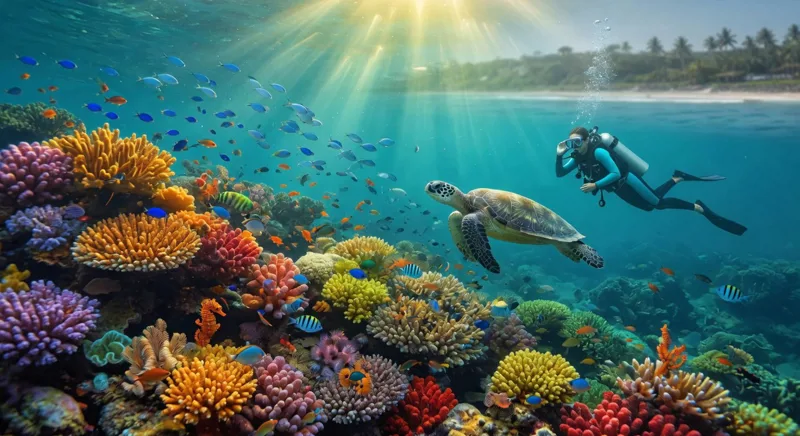
Why coral reefs matter far beyond tourism is a question with consequences for food security, coastal safety, medicine, biodiversity, and climate resilience. These vibrant ecosystems are not simply beautiful places for diving and snorkeling—they are natural infrastructure that supports people and economies around the world.
Coral Reefs Are Essential Natural Infrastructure
Coral reefs function much like underwater breakwaters. Their complex structures absorb and reduce wave energy before it reaches the shore, helping limit coastal erosion, flooding, and storm damage. In regions exposed to hurricanes, cyclones, and rising seas, healthy reefs can provide a first line of coastal protection.
That protection has a significant economic value. Replacing reef services with seawalls, barriers, and other engineered coastal defenses could require enormous public investment. Unlike concrete structures, reefs are living systems that can provide multiple benefits at the same time—including habitat, fisheries, shoreline protection, and carbon-related ecosystem services.
They Support Food Security and Fishing Communities
Coral reefs provide habitat, spawning grounds, and nursery areas for many fish and invertebrates. These species support small-scale fishing, commercial fisheries, and local diets, particularly in coastal communities and island nations.
For millions of people, reef-associated fisheries are more than an industry. They are a source of protein, household income, and cultural identity. When reefs decline, fish populations can become less productive, placing pressure on food prices and increasing dependence on imported food.
Healthy reef management can therefore contribute to:
- Local food security
- Sustainable fisheries
- Fishing jobs and household income
- Nutrition in remote coastal communities
- Economic stability in small island states
Coral Reefs Are Biodiversity Hotspots
Although coral reefs cover a relatively small area of the ocean, they support an extraordinary variety of marine life. They provide shelter and feeding areas for fish, mollusks, crustaceans, sea turtles, and countless microorganisms.
This biodiversity matters even when people never visit a reef. Diverse ecosystems are generally better able to recover from disturbances, sustain food webs, and maintain ecological functions. Losing reef habitat can trigger wider declines in marine life, affecting seagrass beds, mangroves, open-water species, and coastal fisheries.
Reefs May Help Advance Medicine
Marine organisms have evolved unusual chemical defenses to survive competition, disease, and predators. As a result, coral reef ecosystems are important sources of compounds studied for pharmaceutical research.
Reef organisms have contributed to research involving antiviral treatments, cancer therapies, pain management, and other medical applications. Some compounds derived from marine life have already entered clinical use, while many others remain under investigation.
Protecting coral reefs is therefore also a way of preserving a living library of biological discoveries. Once species disappear, potentially valuable genetic and chemical information may disappear with them.
The Economic Value Goes Beyond Reef Tourism
Tourism is one visible benefit of coral reefs, but it represents only part of their total value. The United Nations Environment Programme estimates that reef-related goods and services—including fisheries, tourism, coastal protection, and medicinal compounds—are worth about $2.7 trillion annually worldwide.[1]
Reefs also support economic activity indirectly. A healthy reef can help maintain beaches, protect hotels and homes from waves, support seafood supply chains, and sustain local businesses that depend on a stable coastal environment.
| Reef benefit | Why it matters |
|---|---|
| Coastal protection | Reduces wave energy, erosion, and storm-related damage |
| Fisheries | Supports food, jobs, and local income |
| Medicine | Provides compounds for pharmaceutical research |
| Biodiversity | Maintains complex marine food webs and habitats |
| Cultural value | Connects communities with heritage, identity, and tradition |
Climate Change Makes Reef Protection Urgent
Coral reefs are highly sensitive to changes in ocean temperature. When water remains unusually warm, corals can expel the microscopic algae that provide much of their energy and color. This process, known as coral bleaching, can lead to coral death when stressful conditions persist.
Climate change is also contributing to ocean acidification, which can make it more difficult for corals and other organisms to build their calcium carbonate skeletons. After severe bleaching, reef recovery may take at least 10 to 15 years, and repeated heat stress can prevent full recovery.[2]
Local actions still matter. Reducing pollution, protecting herbivorous fish, managing coastal development, and limiting destructive fishing can improve reef resilience. These steps cannot replace rapid climate action, but they can give reefs a better chance of surviving global stress.
How Individuals and Communities Can Help
- Reduce carbon emissions through energy efficiency and lower-carbon transportation.
- Choose seafood from well-managed and sustainable fisheries.
- Avoid products that contribute to destructive coastal development or wildlife exploitation.
- Reduce fertilizer, plastic, and chemical runoff entering waterways.
- Support marine protected areas and science-based reef restoration.
- Practice reef-safe behavior by avoiding contact with corals while snorkeling or diving.
Why Coral Reefs Matter to Everyone
Coral reefs matter far beyond tourism because they protect shorelines, feed communities, support biodiversity, inspire medical research, and strengthen coastal economies. Their value is measured not only in visitor spending, but also in safer homes, healthier fisheries, scientific discoveries, and resilient communities.
Protecting reefs is ultimately an investment in natural infrastructure and human well-being. When healthy coral ecosystems disappear, the loss reaches far beyond the ocean—it affects economies, public safety, food systems, and future generations.
You May Also Like
 Education
The Difference Between Correlation and Causation
 Science
Why Some Studies Cannot Be Replicated
 Science
How to Tell a Breakthrough From a Press Release