Polar Bears Might Not Be The Top Arctic Predators After All

There are plenty of reasons to want to visit the Arctic, from the incredible sights to the amazing wildlife that make their home here. However, there are also plenty of reasons to steer clear of this part of the world. If it’s not the extreme cold that might put you off, it’s probably the risk that some of that wildlife poses to your life.
Creatures like the polar bear may look cute and cuddly in photographs, but if you got up close to one, we doubt they’d give off that same vibe. They’re one of the most ruthless animals that can survive in this climate, so encountering one could be the last thing you do. Are they the top Arctic predator, though, or are there other creatures we should be more afraid of? It turns out that polar bears may have some competition.
Polar bears aren’t the only arctic animal that preys on many other creatures
It’s maybe no surprise that polar bears have long been considered the top dog of the Arctic. Much like other species of bear around the world, these animals are ruthless and have the strength to take down a ton of different prey. However, just because most other animals in the Arctic are no match for them, that doesn’t necessarily mean they’re the area’s only substantial predator. It’s quite possible that there’s another animal in this part of the world that preys upon just as many other creatures as the polar bear. You might be surprised to learn, though, that this predator is a sea star.
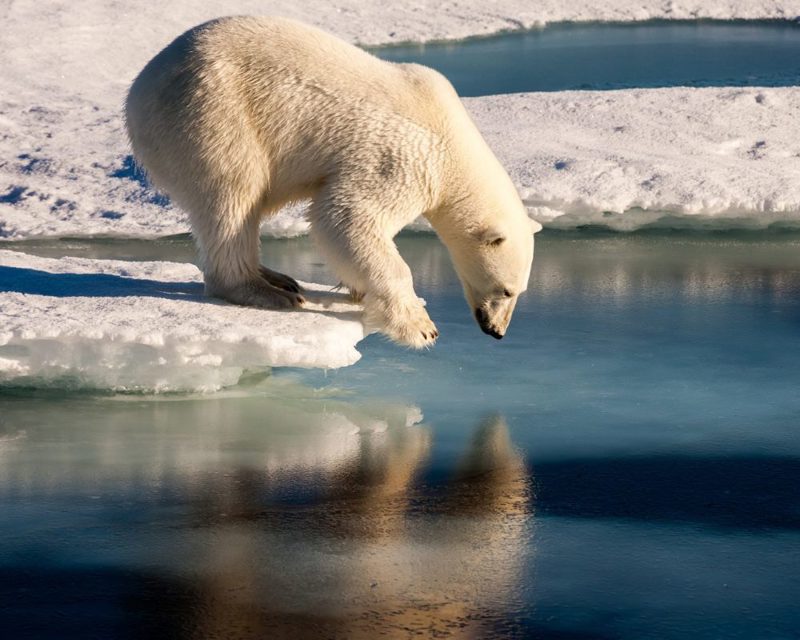
Sea stars hunt for prey on an equivalent scale to polar bears
It might seem difficult to compare a sea star to a polar bear, especially when talking about fearsome predators in the arctic. However, when you look at food chains in this part of the world, you start to see just how often these creatures sit at the top. Sea stars feast on things like bivalves, sea cucumbers, and sponges, which in turn survive on organisms like phytoplankton and amphipods. What they eat ends up being on an equivalent scale to polar bears. The only real difference is the size of the prey on which they feast, with the bears appearing more predatory because they go for animals like walruses, seals, and beluga whales.
Scientists initially overlooked the seafloor, believing there was a lack of predators
So, how come this revelation about the predatory nature of sea stars is only now coming to light? Apparently, it’s because certain food chains have been overlooked in the past. The benthic (seafloor) chain hasn’t been viewed as something of great importance before because scientists didn’t believe there were any notable predators there. However, a new study at the end of 2022 proved that these assumptions were wrong after researchers took an in-depth look at a Canadian Arctic coastal marine ecosystem. They found a lot of connections on the benthic level, many of which led back to sea stars.
The Pterasteridae family of sea stars are notably predatory in the Arctic
Of course, all this isn’t to say that every sea star is on the same level as polar bears. After analyzing data for nearly 1,600 different animals in the Southampton Island coastal ecosystem, the scientists identified a family of sea stars that were notably predatory. This was the Pterasteridae family, which are the ones that feed on things like bivalves and sea cucumbers. Along with feasting on many different creatures, the researchers noted another comparison between these sea stars and polar bears. Apparently, both are willing and able to scavenge, which is partly why they’ve succeeded in thriving in the Arctic.
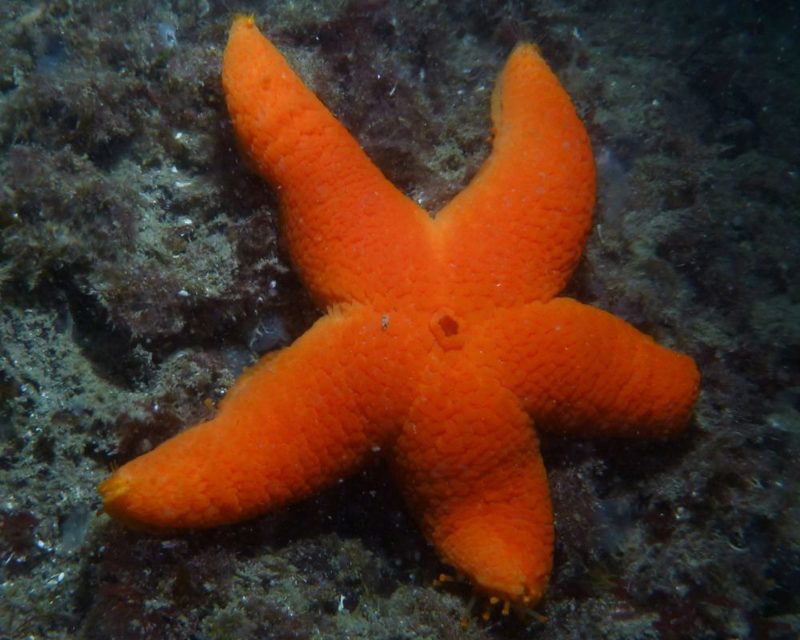
These sea stars could be some of the ocean’s greatest predators
So, what do these findings signify? Well, they suggest that there may be instances in other parts of the world where benthic food chains have been wrongly overlooked. The Pterasteridae sea stars exist in many different ecosystems, meaning their predatory ways could be helping them to thrive elsewhere too. If that’s the case, these could actually be one of the ocean’s greatest predators. That’s probably hard to imagine knowing the kind of animals that lurk underwater. However, the food chains speak for themselves. Not all successful predators have to be the biggest and most terrifying creatures around.
After seeing this, it’s clear that polar bears definitely have competition as powerful predators in the Arctic. However, from a human perspective, it’s definitely still the bears we need to be most afraid of encountering. Sea stars might be successful predators, but we’re probably a bit too big for their appetite.
You May Also Like
 Education
The Difference Between Correlation and Causation
 Science
Why Some Studies Cannot Be Replicated
 Science
How to Tell a Breakthrough From a Press Release