Why Noise-Canceling Headphones Work Better on Some Sounds
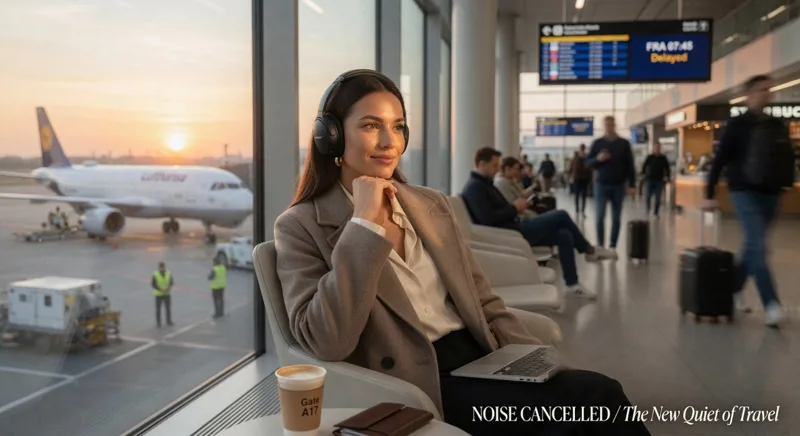
Why noise-canceling headphones work better on some sounds comes down to frequency, consistency, timing, and fit. Active noise cancellation is excellent at reducing steady low-frequency noise, but voices, keyboard clicks, wind, and sudden high-pitched sounds are much harder to control.
How Active Noise Cancellation Works
Noise-canceling headphones use tiny microphones to listen to surrounding sound. A digital signal processor analyzes that noise and creates a matching sound wave with an opposite phase. When the two waves meet, they interfere with each other and reduce the unwanted sound—a process called destructive interference.[1][2]
This does not mean the headphones “erase” every sound. Instead, the system continuously estimates the noise reaching your ears and produces anti-noise quickly enough to reduce it. The closer the headphones can predict the sound’s timing and frequency, the better ANC performs.
Why ANC Is Best at Low-Frequency Noise
Active noise cancellation works especially well against sounds such as:
- Airplane engine rumble
- Train and bus vibrations
- Air-conditioning systems
- Ceiling fans
- Road and vehicle noise
- Steady office machinery
These sounds usually have longer wavelengths and repeat relatively consistently. That gives the headphone’s processor more time to measure the sound, calculate the appropriate anti-noise, and play it through the drivers.[1][4]
Low-frequency noise also travels through walls, seats, and the body more easily than many high-frequency sounds. Passive materials alone can struggle to block it, which is why ANC creates such a noticeable improvement on airplanes and during commuting.
Why Voices and Sudden Sounds Are Harder to Cancel
High-frequency sounds change quickly
High-pitched sounds have shorter wavelengths and can change rapidly. A tiny timing error may reduce cancellation or even make the result less effective. The higher the frequency, the more difficult it becomes to generate anti-noise with precisely the right timing and phase.[3][5]
This is why ANC may struggle with:
- Human speech
- Baby cries
- Dog barking
- Alarm beeps
- Keyboard clicks
- Clattering dishes
- Applause and crowd noise
Sudden sounds arrive too quickly
A car horn, dropped object, or shouted word may reach your ear before the system can fully identify and counter it. Digital processing is extremely fast, but it is not instantaneous. Short, unpredictable sounds are therefore more difficult to cancel than a continuous engine hum.[1]
ANC Versus Passive Noise Isolation
Noise-canceling headphones use two different forms of protection: active noise cancellation and passive noise isolation.
| Sound type | Technology that usually helps most | Reason |
|---|---|---|
| Engine rumble | Active noise cancellation | It is steady, low-frequency, and predictable. |
| Speech | ANC plus a strong ear seal | Speech contains changing mid- and high-frequency components. |
| Keyboard clicks | Passive isolation | Short transients are difficult for ANC to predict. |
| Wind | Good fit and wind-resistant design | Turbulence can confuse external microphones. |
| High-pitched alarms | Passive isolation, not complete removal | High frequencies are challenging to cancel accurately. |
Passive isolation comes from the ear cups or ear tips physically blocking sound. A tight seal can reduce higher-frequency noise that ANC does not handle as effectively. This is why over-ear headphones with well-padded cups and properly fitted earbuds often outperform poorly sealed models, regardless of their advertised ANC features.[1][5]
Why Wind Can Make Noise Cancellation Worse
Wind is a particularly difficult problem for wireless earbuds and headphones. Air moving across external microphones can create turbulence and pressure changes. The ANC system may interpret those microphone signals as noise and generate anti-noise for a sound that does not accurately represent what reaches your ear.[5]
The result can be wind roar, crackling, or an unnatural rushing sound. Some headphones use microphone shields, adaptive processing, and wind-reduction modes, but no system eliminates the problem in every outdoor condition.
How Headphone Fit Affects ANC Performance
Even advanced noise-canceling headphones depend on a good acoustic seal. Gaps around an ear cup or an incorrectly sized ear tip let outside sound leak in and reduce the effectiveness of both passive isolation and active cancellation.
For better results:
- Choose ear tips that seal without causing discomfort.
- Position over-ear cups so they fully surround your ears.
- Keep ear cushions clean and replace compressed or damaged pads.
- Use the manufacturer’s fit test when the app provides one.
- Try different ANC modes for travel, indoor use, and outdoor listening.
Does More ANC Always Mean Better Sound?
Not necessarily. Aggressive noise cancellation can sometimes create a feeling of ear pressure, alter the sound balance, or introduce a faint processing hiss. Adaptive ANC systems adjust cancellation according to the environment, while transparency modes intentionally allow outside sound through for conversations and safety.
Remember that ANC is not hearing protection in every situation. Loud concerts, construction equipment, and industrial environments may require properly rated hearing protection rather than consumer headphones.
The Bottom Line
Noise-canceling headphones work best when unwanted sound is steady, low-pitched, and predictable. They are less effective against sudden, high-frequency, irregular sounds because those signals are harder to measure and counter with perfect timing. The best real-world performance comes from combining effective ANC with a comfortable, well-sealed fit.
So, if your headphones silence airplane rumble but leave conversations and keyboard clicks audible, they are probably working as designed—not failing. Different sounds require different solutions, and the strongest noise reduction usually comes from active cancellation and passive isolation working together.
References
You May Also Like
 Education
The Difference Between Correlation and Causation
 Science
Why Some Studies Cannot Be Replicated
 Science
How to Tell a Breakthrough From a Press Release