Have Scientists Found Radio Waves From 8 Billion Light-Years Away?

Scientists are always learning new things about the universe, and each discovery blows our minds. There's so much out there that we don't understand, plenty of which will elude us forever. However, thanks to the detection of a new radio signal, it seems that we might be one step closer to unraveling one of these mysteries.
Given how far away the signal apparently came from, there's a chance it may help scientists to craft a clearer timeline of the universe up to this point. There's no guarantee of anything, but if it is successful, we'll know more about the history of the universe than ever before.
A telescope in India picked up a signal from billions of years ago
The Giant Metrewave Radio Telescope in India has created a buzz recently after picking up an unusual radio frequency signal. Found in the galaxy SDSSJ0826+5630, it broke records because it originated 8.8 billion light-years from this planet. To put that into context, this means it was emitted many years ago when the universe was around a third of its age. It's quite surreal to think that this telescope located a signal that was sent out billions of years ago. However, while that is noteworthy in itself, it's not the only reason this discovery is so significant. No, it's the fact that the emission line stems from neutral hydrogen, the universe's most ancient element.
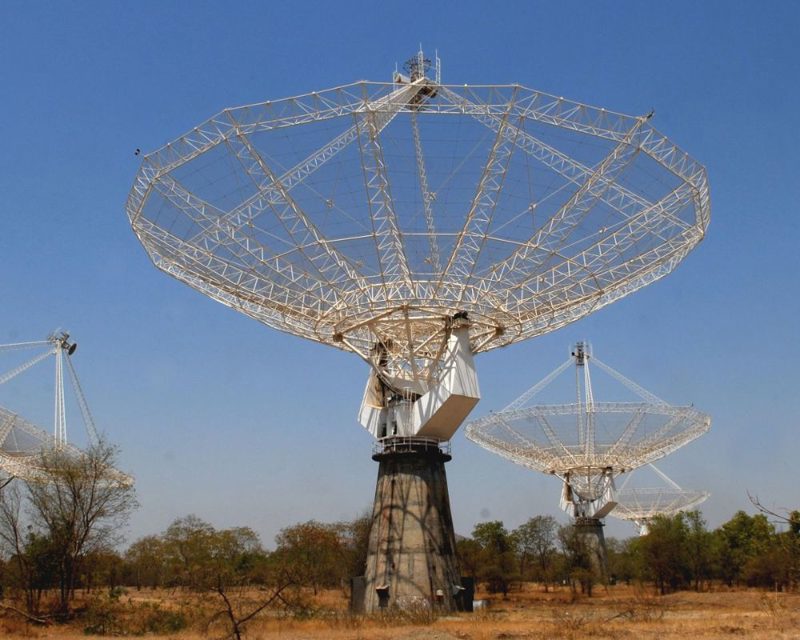
Neutral hydrogen potentially played a role in the formation of stars and galaxies
Neutral hydrogen has been around far longer than any of us, this planet included. In fact, it's supposedly the reason for the formation of many of the universe's early stars and galaxies. That's why astronomers have reportedly long been interested in finding a signal like this. The hope is that receiving one would shed some light on some of the earliest moments in the universe. However, before now, locating one has proven difficult because of how far the signals have to travel. Miss one, and that's billions of years gone to waste. Now that scientists have succeeded in finding one, though, could this mean that tracking down others will go more smoothly?
Gravitational lensing is the reason scientists managed to find this distant signal
Another reason that this discovery is so significant is that, before now, scientists had only managed to track a signal like this from a nearby galaxy. With this new one being so much further away, it gives us a chance to better understand the universe on a wider spectrum. The scientists were reportedly able to find it thanks to gravitational lensing. This is apparently when something significant acts as a lens between a telescope and a source. Galaxy SDSSJ0826+5630 was apparently the large object in this situation and helped to steer the signal into the Giant Metrewave Radio Telescope's focus. It reportedly magnified the signal by 30 times, hence why the scientists were able to identify it.
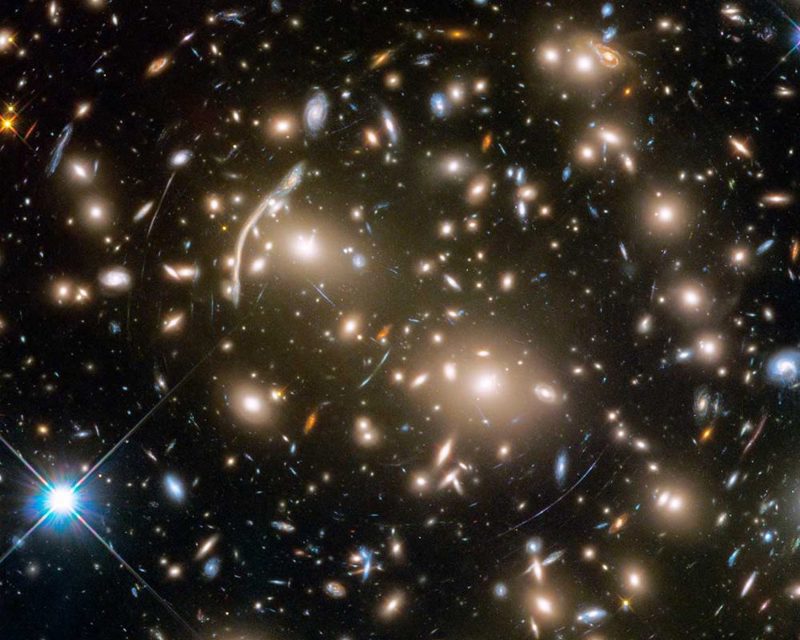
Scientists apparently hope to uncover the timeline for when the first stars formed
The hope moving forward is that gravitational lensing will allow for more discoveries like this in the future. The aim is seemingly to identify when the universe's first stars began to shine all those years ago. Scientists would apparently be able to track this using these neutral hydrogen signals because of how those stars came to be. When they form, they reportedly send out ultraviolet light. This reportedly removes the electrons from the surrounding hydrogen atoms, stopping them from being neutral. When that ultraviolet light later loses intensity, some of these atoms return to being neutral hydrogen.
Succeeding in their goal will not be a quick or simple task for scientists, and there's no guarantee of success. However, the Giant Metrewave Radio Telescope managing to pick up this signal from galaxy SDSSJ0826+5630 proves that their ambition is achievable. We'll just have to see if anything more comes out of using gravitational lensing.
You May Also Like
 Education
The Difference Between Correlation and Causation
 Science
Why Some Studies Cannot Be Replicated
 Science
How to Tell a Breakthrough From a Press Release