These Are The Largest Earthquakes Ever Recorded

If you’ve ever experienced an earthquake, you’ll likely understand just how terrifying these natural disasters can be. Thankfully, not all earthquakes actually do that much damage. Some rate low on the Richter scale, meaning they’re little more than a slight tremor, assuming you even feel anything at all. Unfortunately, some earthquakes can be incredibly intense, and the devastation they cause is immense.
From destroying homes and ending lives to triggering eruptions and creating tsunamis, these earthquakes are truly something to be feared. We’re grateful that they don’t happen often. However, on those rare occasions when they do hit, the pain they inflict is felt around the world. History has seen some truly awful earthquakes over the years, and these are the largest ones ever recorded.
The first magnitude 9.0 earthquake hit Russia’s Kamchatka Peninsula in 1952
Supposedly, magnitude 9.0 earthquakes are only supposed to happen one to three times every century. However, since the 1950s, there have been a whopping five that measured this high on the Richter scale. The first of these struck in 1952 and occurred in the Kamchatka Peninsula in Russia. Surprisingly, despite the intensity of this natural disaster, no one allegedly lost their lives to this earthquake. That’s despite the 43-foot tsunami that it generated. Although everyone apparently survived, there were millions of dollars of damage, particularly in Hawaii. In today’s money, it totaled more than $11 million, which is a significant amount. However, it’s far below the cost of damage caused by many much less severe earthquakes.
A 2011 9.1 magnitude earthquake in Japan is allegedly the costliest in history
One incredibly powerful earthquake that did cause an expensive amount of damage was the 9.1 magnitude one that struck Tōhoku, Japan, in March 2011. Apparently, it’s the costliest earthquake in history, causing damage amounting to more than $300 billion. Much of that damage was tied to the 332,000 buildings reportedly destroyed by the earthquake. Thousands of roads and dozens of bridges and railways were also affected, along with several nuclear reactors. This led to a nuclear disaster, which - along with the strong aftershocks and consequent tsunami - only made things worse. Roughly 15,700 people allegedly lost their lives because of the incident, with thousands more reported injured or missing in the aftermath.
Another 9.1 earthquake came in 2004 around the Sumatra-Andaman islands
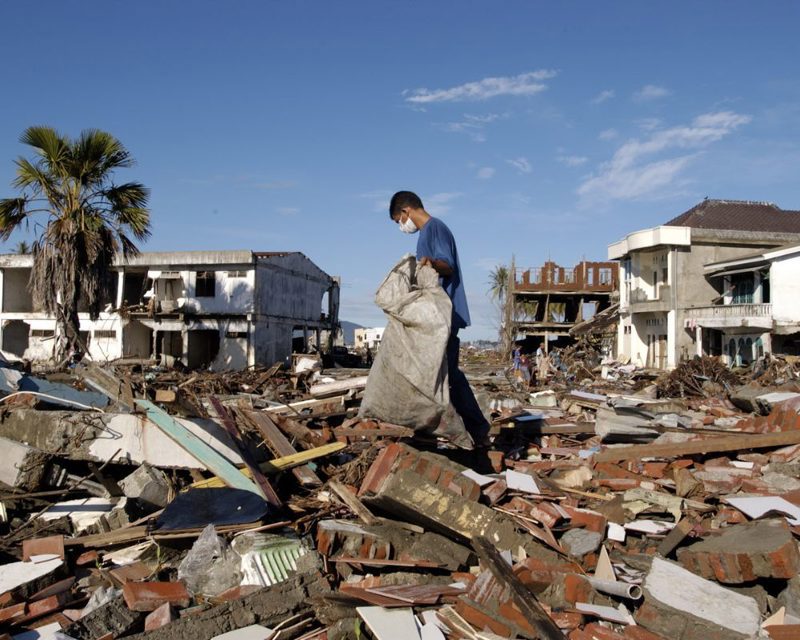
While the 2011 earthquake in Tōhoku might have been the costliest in history, the one that hit the Sumatra-Andaman Islands in 2004 wasn’t far behind. The damage reportedly equated to around $15 billion after the 9.1 magnitude disaster struck. The earthquake occurred just one day after Christmas, with some 300,000 people allegedly believed to have lost their lives. Over a million more were apparently displaced, with the tsunami actually mostly to blame for this. Although the city of Banda Aceh reportedly felt strong shaking from the earthquake, the resulting tsunami consequently devastated ten countries in Asia and Africa. The number of lives lost at the time was supposedly more than any other tsunami in history.
A 9.2 magnitude earthquake in Alaska in 1964 affected much of the west coast
Not many people lost their lives when an earthquake struck Prince William Sound in Alaska in March 1964. Despite reportedly having a magnitude of 9.2, there were allegedly just 128 or so fatalities. However, property loss apparently amounted to $311, with places like Anchorage suffering significantly, despite being 75 miles away from the epicenter. That was allegedly due to landslides triggered by the disaster, which not only destroyed buildings but also affected electrical systems, water supplies, sewerage, and more. As with the other earthquakes, tsunamis were generated by the movement of the ground and consequently affected many parts of Alaska. Other states further south, including Washington, Oregon, California, and Hawaii, were also impacted by the disaster in Alaska.
A 1960 earthquake in Valdivia, Chile, had a magnitude of 9.5
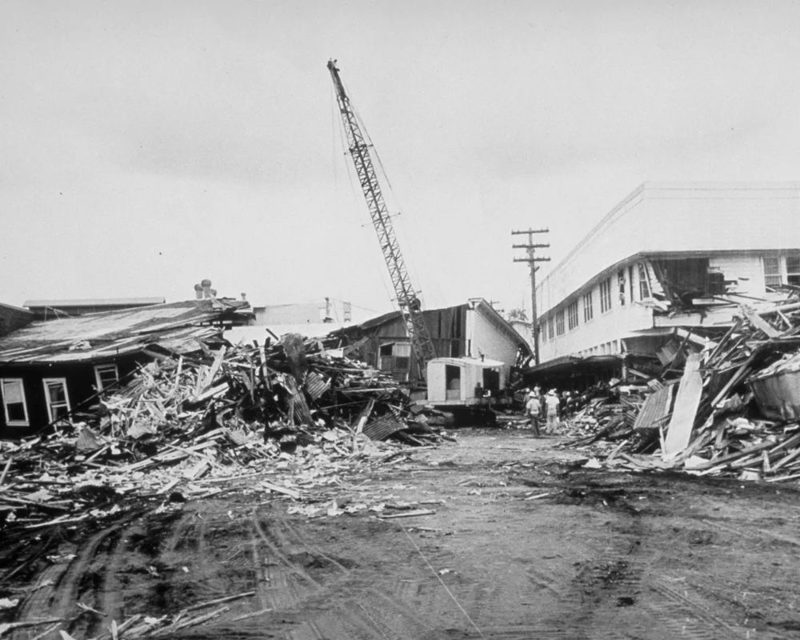
Usually, the larger the magnitude of the earthquake, the likelier it is that people will lose their lives. However, that doesn’t mean that the biggest earthquake in history actually caused the most untimely passings. This disaster occurred in Valdivia, Chile, in May 1960 and reportedly claimed the lives of several thousand people. While that number is still devastatingly high, it’s significantly lower than the one that struck Japan in 2011 or the Sumatra-Andaman Islands in 2004. Several hundred of those lives were allegedly lost in places like Hawaii and the Philippines, thanks to the earthquake triggering a tsunami. Moreover, this natural disaster left millions more homeless, with over $550 million of damage reportedly caused to southern Chile.
The good news is that earthquakes of this magnitude are extremely rare, with only five ever recorded. However, as we’ve seen, the most powerful earthquakes aren’t always the most devastating. So, while they might have had a major impact on the Richter scale, they’re not necessarily the disasters we should be most concerned about.
You May Also Like
 Education
The Difference Between Correlation and Causation
 Science
Why Some Studies Cannot Be Replicated
 Science
How to Tell a Breakthrough From a Press Release