A Look Into The Indigenous Americans Who Came To Europe

When we think about transcontinental travel from centuries ago, we don't often think of movement from the Americas to Europe. Usually, it's vice versa, and that's very much what we've associated the "Age of Discovery" as being. This period around the middle of the 15th century to the middle of the 16th century involved a lot of exploration on this side of the Atlantic from Europeans. Christopher Columbus is an excellent example of that.
However, historian Caroline Dodds Pennock has helped us to realize that movement during this period wasn't solely from east to west. There are plenty of examples of Americans traveling overseas back then, and Pennock's new book gives us an insight into that. So, let's take a look into the Indigenous Americans who came to Europe.
Martín Cortés was born in Mexico but raised as a nobleman in Spain
One Indigenous American who traveled to Europe during the "Age of Discovery" was Martín Cortés. Although raised in Spain, he was actually born in Mexico City in 1522. After traveling across the Atlantic as a toddler, he was brought up to be a Spanish nobleman with quite an illustrious military career. He did return to the Americas at least once, doing so to visit the Indigenous relatives on his mother's side. However, the majority of his time was spent in Spain and other parts of Europe. His tale is quite a remarkable one, given that it differs a lot from the exploits of most other Indigenous people from this period. Typically, those who came to Europe from America did so as slaves or passed away due to the spread of disease. That potentially explains why their stories have been overlooked in history for so long.
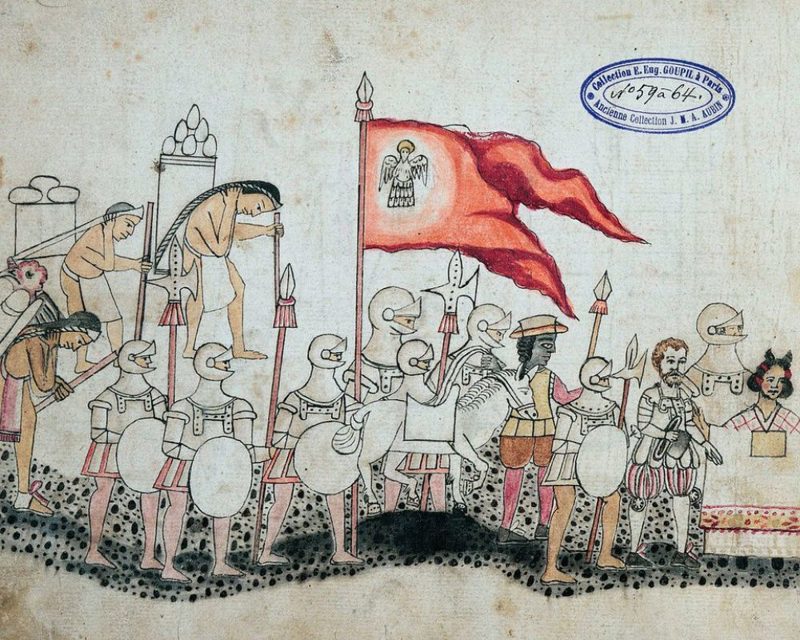
Isabel was an Indigenous mother who lived a respectable life in Spain
Someone else who came to Spain during the "Age of Discovery" was apparently a woman named Isabel. According to Pennock, she arrived with a man named Pedro and lived a respectful life with her sons, Lorenzo and Gaspar. Formal and informal relationships between Spanish men and Indigenous women were allegedly common in the Americas. So, it was perhaps not a huge surprise that Pedro brought Isabel with him to Spain. However, the relationship between the two did not lead to marriage. Instead, Pedro reportedly married a different Isabel, who was native to Spain. When he later passed away, that Isabel reportedly claimed that the Indigenous woman and her sons were enslaved, despite that not being the case. The trio had apparently lived a very decent life overseas, so the accusations allegedly angered them. Fortunately, they supposedly received freedom and compensation in 1570.
Sachem Mahomet Weyonomon passed away overseas while delivering a petition
One notable Indigenous traveler who came later than the "Age of Discovery" was Sachem Mahomet Weyonomon. He reportedly traveled to England in the 1730s with the intention of distributing a petition to the then-British King George II. The aim of the petition was to let the crown know about the problems caused by the British settlement of tribal lands across the Atlantic. In particular, it was about a region in the US that now falls into the state of Connecticut. Unfortunately, Weyonomon never got to meet with anyone official because he lost his life when he contracted smallpox. To make matters worse, he wasn't allowed to be buried in London because he was in the city as a foreign individual. He was buried in an unmarked grave in Southwark Cathedral, where a pink granite sculpture now stands. The late-Queen Elizabeth II permitted this memorial when she met with members of the Mohegan Tribe in 2006.
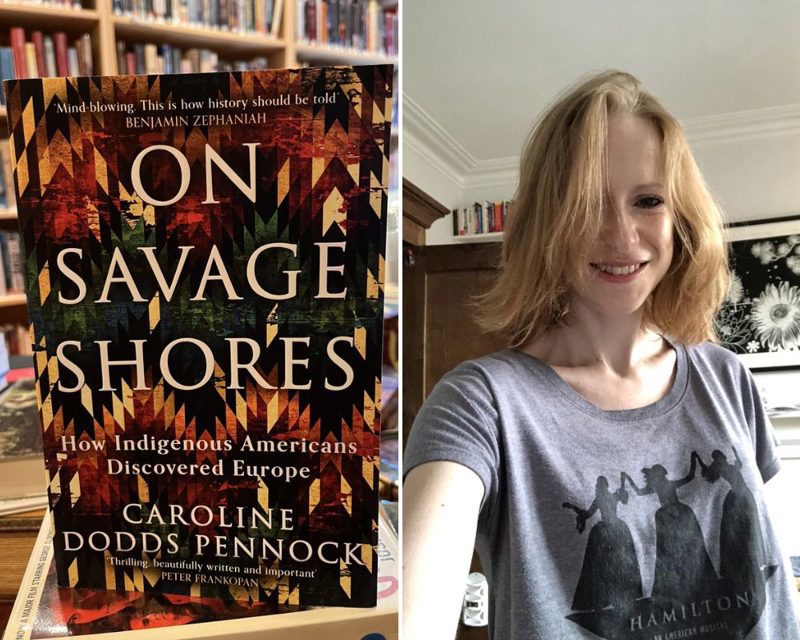
Pennock's book provides essential insight into the history of Indigenous travel
The stories of all these Indigenous people deserve to be told, and we have people like Caroline Dodds Pennock, Coll Thrush, and other similar authors to thank for that. Their books are shedding light on a part of history that was buried deep because it didn't align with what certain people viewed to be important. There's still a great deal to learn and understand about the Indigenous movement of the past, although some of those stories will stay lost forever. Thankfully, books like Pennock's 'On Savage Shores' give us insight that we've never had before. Not only does it remind us that movement wasn't just from east to west, but it reveals that some Indigenous travelers didn't simply leave America because they were enslaved. While many were and were consequently mistreated for an excruciating amount of time, some who came to Europe were involved in trade or diplomacy. There are positive stories out there of these travelers, and they deserve to be told.
We cannot right the wrongs of the past, but we can ensure that the world knows the extent of what happened back then. Indigenous Americans and other Aboriginal tribes were more prevalent than history suggests, and people like Pennock are here to remind us of that. We can only hope that she and other historians like her are able to uncover so many more Indigenous stories moving forward.
You May Also Like
 Education
The Difference Between Correlation and Causation
 Science
Why Some Studies Cannot Be Replicated
 Science
How to Tell a Breakthrough From a Press Release